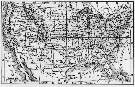
In 1790 the centre of population was . . 22 miles east of Baltimore. " 1800 . . . . . . . . . . . . . . . . . 17 miles west of Baltimore. " 1810 . . . . . . . . . . . . . . 40 miles northwest of Washington. " 1820 . . . . . . . . . . . . . . . 16 miles north of Woodstock, Va. " 1830 . . . . . . . . . 19 miles west by southwest of Mooland, W.Va. " 1840 . . . . . . . . . . . . . . 16 miles west of Clarksburg, W.Va. " 1850 . . . . . . . . . . . 23 miles southeast of Parkersburg, W.Va. " 1860 . . . . . . . . . . . . . . 20 miles south of Chillicothe, 0. " 1870 . . . . . . . . . . . 48 miles east by north of Cincinnati, 0. " 1880 . . . . . . . . . . . 8 miles west by south of Cincinnati, 0. |
|
It is a significant fact that corn is king in the pivotal State of the Union, though only eight million of its fifty-two million acres are under cultivation. If the State were as thickly populated as England, it would contain thirty-five million people, --five times as large a population as would be necessary to bring every acre of its arable land into a high state of cultivation. If a million and a quarter of inhabitants cultivate eight million acres, six million of people will bring the whole area under the plough and harrow. Corn became king in Kansas in 1883. In 1860 the farmers of that State raised but six million bushels of corn; in 1883 they raised one hundred seventy-two million bushels, and thereby stepped to the front. Moreover, this vast yield of corn was mostly sound. The "Report of the United States Department of Agriculture for March, 1884" says that "Kansas, in 1883, raised sixty-two million more bushels of 'merchantable corn' than did any other State of the Union." Said report furnishes the following very instructive tables:-- |
                      Sound Corn.

                 Bushels. |                  Bushels.|
Oregon . . . .    106,026 | Indiana . .    46,853,800|
Dakota . . . .  1,867,721 | Texas  . . .   57,463,133|
Michigan . . .  3,854,214 | Kentucky . .   64,125,476|
Wisconsin  . .  4,008,481 | Nebraska . .   67,856,863|
New York . . .  6,129,445 | Illinois . .   73,363,140|
Mississippi  . 23,236,532 | Missouri . .    6,993,000|
Ohio . . . . . 27,952,800 | Kansas . . .  158,976,828|
Iowa . . . . . 44,103,540 |
|
|
That the reader may gather an idea of the exact force of these figures, the per cent of corn raised in the various States which was actually merchantable is given:-- |
Oregon . . . . 9 1/3 | Indiana . . . . 49 Wisconsin . . 17 | Missouri . . . 60 Michigan . . . 18 | Nebraska . . .. 67 Iowa . . . . . 26 | Kentucky . . . 82 New York . . . 35 | Texas . . . . . 91 Illinois . . . 36 | Mississippi . . 92 Dakota . . . . 38 | Kansas . . . .. 92 Ohio . . . . . 38 | |
|
The United States Department of Agriculture shows, also, the number of bushels per acre raised in the best corn-growing States in 1883, and Kansas leads the van:- |
                Bushels per Acre.

South Carolina . .   8.0 | New York . . .  23.0
Georgia  . . . . .   8.7 | Oregon . . . .  23.5
Mississippi  . . .  13.5 | Kentucky . . .  24.0
Arkansas . . . . .  17.5 | Colorado . . .  25.0
Texas  . . . . . .  17.5 | Illinois . . .  25.0
Dakota . . . . . .  18.2 | Indiana  . . .  27.0
Tennessee  . . . .  20.0 | Missouri . . .  27.5
Minnesota  . . . .  20.8 | Kansas . . . .  36.7
Wisconsin  . . . .  21.0.|
|
              Bushels of Wheat.

Kansas . . . .  17.5 | New York . . .  10.3
Dakota . . . .  16.0 | Ohio . . . . .  10.0
Nebraska . . .  15.5 | Illinois . . .  10.0
California . .  13.0 | Texas  . . . .   8.5
Minnesota  . .  13.0 | Arkansas . . .   6.1
|
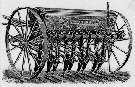 The number of bushels of wheat raised in Kansas in various years from 1860 to 1883 was as follows:-- |
1860 . . . 194,173 | 1877 . . 14,316,705 1870 . . . 2,391,198 | 1878 . . 32,315,358 1872 . . . 3,062,941 | 1880 . . 17,324,141 1873 . . . 5,994,044 | 1881 . . 20,479,579 1874 . . . 9,881,383 | 1882 . . 35,734,846 1875 . . . 13,209,403 | 1883 . . 26,851,100 1876 . . . 14,620,225 |
|
The yield of oats in Kansas is scarcely less remarkable than that of wheat The following comparative statement of the number of bushels of oats per acre in 1883 is derived from official sources:-- |
Arkansas . . . 14.4 | Iowa . . . . 34.1 Texas . . . . 22.8 | Michigan . . 34.6 Missouri . . . 28.7 | Illinois . . 36.1 Colorado . . . 29.3 | Nebraska . . 40.0 Wisconsin . . 30.4 | Dakota . . . 42.9 Minnesota . . 33.1 | Kansas . . . 44.6 |
|
In 1884 Kansas sowed fifteen per cent more acreage of oats than in 1883. The State produced, also, 49,113,000 bushels of wheat, which was 13,000,000 more bushels than any State raised in 1883. Other statistics prove that farming in Kansas is diversified notwithstanding the prominence of corn and wheat. The rye crop of the State was:-- |
                               No. Bushels.        Value.

1877 . . . . . . . . . . . . .  2,525,054        $806,092
1878 . . . . . . . . . . . . .  2,722,008         816,602
1883 . . . . . . . . . . . . .  5,084,391    1,666,909.70

Other Farm Products

Stands of bees in 1883 . . . . . . . . . .         19,752
Pounds of honey  . . . . . . . . . . . . .        325,000
Pounds of cheese . . . . . . . . . . . . .        591,770
Pounds of butter . . . . . . . . . . . . .     23,947,016
Pounds of sugar made from sorghum  . . . .        600,000
Gallons of syrup . . . . . . . . . . . . .      4,684,023
Acres of sorghum in 1883 . . . . . . . . .        102,042
Value of sorghum cane per acre . . . . . .       . $20.17
Total value of product of sorghum fields .  $2,058,127.60
|
|
The per cent of returns on money invested in farming lands, officially stated, puts Kansas again at the head of the roll of honor. In Pennsylvania it is 13 1/8 per cent; Ohio, 13 8/9; New Jersey, 15 1/2; Massachusetts, 16 1/3; New York, 16 5/6; Maryland, 17 3/8; Indiana, 18 1/30; Michigan, 18 1/4; Illinois, 20 1/5; Wisconsin, 20 1/3; Virginia, 21 1/8; Kentucky, 21 1/3; Kansas, 22 1/4. The value of Kansas farms is a very significant item. It is the value of only the 21,417,468 acres now in farms, and does not include the more than 30,000,000 acres not in farms. These farms are valued at only $10.98 per acre, while Massachusetts farms average $43.52; Connecticut, $49.34; New York, $44.41; Pennsylvania, $49.30; Ohio, $45.97; Michigan, $36.15; and Illinois farms $31.87 per acre. The following is the comparative value of farms in 1883:-- |
Dakota . . $22,401,048 | North Carolina . . $135,793,602 Colorado . 25,109,223 | Texas . . . . . . 170,468,886 Oregon . . 56,908,575 | Kansas . . . . . . 235,178,936 Arkansas . 74,249,655 | True valuation of all property Nebraska . 105,932,541 | in Kansas . . . $402,864,163.22 Georgia . 111,910,540 | |
Walnut . . . . . 5,895 | Osage Orange . . . 617 Maple . . . . . 6,453 | Catalpa . . . . . 788 Honey Locust . . 1,215 | Other varieties . 38,763 Cottonwood . . . 39,108 | Total . . . . . . 92,839 |
|
Since that time the acreage of tree-planting has rapidly increased. The governor of Kansas said, in his "Arbor Day" proclamation, that "the State which the pioneers found almost treeless and a desert, now bears upon its fertile bosom twenty million fruit trees and more than two hundred thousand acres of forest trees, all planted by our own people." A writer says:-- "These groves have attained a height of from fifteen to sixty feet, the trees having a diameter of three to fifteen inches. The annual growth is from one to two inches diameter, and a four or five year old forest will thereafter furnish a good supply of fuel for the family. In the homestead counties, where the Government has stimulated artificial forestry by the 'Timber Act,' giving any man, or head of family, one hundred and sixty acres of land on the condition of his or her planting forty acres of the same in timber and caring for it seven years, beautiful groves of cottonwood, ash, box-elder, maple, and walnut dot the country in every direction, and lend a charm to the prairie landscape quite beyond the power of description. These charming groves will be as numerous and noteworthy, in the near future of Kansas, as the orchards of Michigan and Western New York. Columns of forest trees outline the farms and highways for miles and miles, in many districts, and it is no unusual thing for a farmer to plant ten thousand young trees in a single year. With the pretty valley timber belts and artificial groves grown into stateliness, ten years from to-day Kansas will be one grand continuous park, and the most beautiful country under the sun. Beyond the question of abundant and cheap fuel, building and fencing timber, and embellishment of landscape, which are involved in extended tree-planting, these groves will superinduce rainfall, temper the February and March winds, and give increased equability to the climate." The State of Nebraska originated "Arbor Day"; thanks for the public enterprise of its citizens. Minnesota was the first State to copy Nebraska's example, and one million five hundred thousand trees were planted in that State on its first "Arbor Day." Now, the States and Territories west of the Missouri River make tree-planting an important industry. Nebraska not only originated "Arbor Day," but enacted stringent laws, also, for the protection of trees, and made very liberal provisions to encourage tree-planting, as follows:-- "The Nebraska State constitution provides that 'the increased value of lands by reason of live fences, fruit and forest trees grown and cultivated thereon shall not be taken into consideration in the assessment thereof.' A State law 'exempts from taxation for five years $100 valuation for each acre of fruit trees planted, and $50 for each acre of forest trees'; also makes it obligatory that 'the corporate authorities of cities and villages in the State shall cause shade trees to be planted along the streets thereof.' "Further: 'Any person who shall injure or destroy the shade tree or trees of another, or permit his or her animals to do the same, shall be liable to a fine of not less than $5, nor more than $50 for each tree injured or destroyed.'       |