
|
[EDITORIAL IN QUINDARO
CHINDOWAN] [1] [QUINDARO,
KANSAS]
[May 23, 1857] OUR SENIOR has made his bow, beaver in hand, defining his position politically. [2] Now friends, here's our sun-bonnet, and as for our positions, political or social, we simply pledge ourself for the future by the past, to speak for what we regard as truth and right, in the love of them and of our neighbor, and trust God for the result. We confess, that, from our own standpoint of observation, we have come to feel the deeper interest in the social structure, as underlying and determining the character and stability of our political institutions. With intemperance, ignorance and idleness, lounging in and about our homes and public houses, what better can we expect than misrule and lawlessness in "the Powers that be?" As individuals, we must, one and all, labor to promote intelligence and virtue in our neighborhood relations, and loving freedom, lay broad and deep its foundations in the great social heart. "I'm a free mon;" "I'm a free mon," was the exclamation of an Irishman at the recent municipal election at Leavenworth, and throwing up his well-worn cap, he added—significant words—"I hav'nt had a chance to be free mon before." This honest-hearted Irishman had probably never heard Pollok's definition—"He is the Freeman whom the Truth makes free." But he did his duty for truth and right when he "had a chance," and thus won the right to rejoice, as he did, in the result, and hurra for the triumph of his ticket. To be a free-man, or a free-woman, in a legal sense even, is a glorious estate. To be free in a political sense is more desirable still. Our fathers felt thus, when they perilled their fortunes and lives for civil freedom.— Our mothers, when they blessed their sons, and bade them face the cannon's mouth for it. But to be free morally—unfettered intellectually, is immeasurably better worth the devotion of our entire energies for a life time. As a people, civil freedom is our most precious treasure, our noblest aim. As individual members of young and growing communities, to hold ourselves free in the truth, is of still higher moment, since the best Governments, while they guard, are but representatives of the aggregate virtue and intelligence of the people;—they follow, but never lead, the popular sentiment. As a people we claim the right of self-government, and are justly indignant at a usurpation which attempts to govern us by laws made for us, not by us. The people that submits to be governed by Legislatures and laws, from the making of which they have been excluded—we call an enslaved people. Our national Declaration of Rights presents them as such. Our position as a people at the present writing, is one of earnest protest against this usurpation, and also of firm determination to resist its demands. This is as it should be. But there is a tyranny more to be feared, because radical in its effects, and insidious in its operations. It is the tyranny of ignorance and prejudice (mother and child,) born of exploded and exploded despotisms. Protesting and battling against these, we may take the nobler stand individually, and maintaining it socially, dig deep the foundations of popular freedom. The measure of success ultimately in securing the right of self-government to all "who have an evident common interest in the institutions under which we live," depends mainly upon the educating of all such up to a just appreciation of the virtue and intelligence, which "perpetuate free institutions," by making the exercise of the right of self-government, an unqualified blessing. "The perpetuity of free institutions depends upon the virtue and intelligence of a people," and "He is the Freeman whom the truth makes free," are declarations alike involving the momentous truth, that to know what is right or true in principle, and live it, is to be free,—free as an individual, free as a people. May it never be said of the people of Kanzas—of the citizens of Quindaro, [3]—either politically or socially,—"Ye knew your duty, but ye did it not?" New friends, old friends, we pledge you our hand, with our heart in it, for earnest work wherever the interests of our own or other mother's sons and daughters are involved in the threatened ill or promised good. N[ICHOLS]. [EDITORIAL IN QUINDARO
CHINDOWAN] [4] [QUINDARO,
KANSAS]
[May 30, 1857] When I left the East to return to my Kansas home, I was persuaded into numerous promises to write back my impressions and observations of the present conditions of the Territory,—its prospects in the immediate future, and the social and political heart throbbings of the people. I delayed to reply to these queries until I could visit several important localities and communicate with intelligent residents of other settlements. From data thus gathered, I can speak satisfactorily to myself, of the social conditions and prospects of the Territory. But of the immediate future politically, everything now, is waiting for "the Powers that be," to make the first move.— One fact is apparent to every person,—whether for or against free Kansas—who mingles freely with our people, viz: their confidence in ultimate success on the one hand, and on the other, the quiet watching—while they build and invest and improve—that bespeaks conscious readiness for whatever looms in the horizon. The impression is general, of an entire population "up and doing," evidently "with a heart for any fate." Expecting nothing from the Government, they are still open-hearted to any just consideration of their rights or wrongs. Determined to achieve their freedom, they are coolly looking to seize upon the happiest means for themselves and country, to vindicate their intelligent adherence to, and support of "law and order." Such is evidently the position of the people, without distinction of sex or class—for in truth there are but two parties in Kansas, politically considered—the actual residents or people of Kansas, and the office holders and seekers. Here, as in New England, the line draws directly between the people and the hangers-on of Government and its pass-feeders. Socially considered, Kansas is in a condition of remarkable prosperity.—When I speak of its prosperity, as remarkable, I take into account, the unparalleled obstacles that have impeded, and which must, with less of wisdom, perseverance and courage, have utterly depopulated the Territory of its best inhabitants. Indeed, I have arrived at the conclusion, that Kanzas is richer to-day in purse, as well as stronger politically, for what she has suffered in the past. Trial has developed the capacity of the people to endure, and directed and schooled their energies to do. The struggle for existence has taught them what are the actual necessaries of life, and the result is a wiser application of means, juster estimates of the good and ill of life. Had the emigrants been allowed to make homes and improve their condition quietly, fewer eyes would have been turned upon the Territory, and probably many years would have slipped away, before its advantages would have been as generally known as they now are. But the driving out policy reminds me of a certain vender of unappreciated goods;—he hired men to travel the country, labelled with the names of his goods, while his traveling advertisers furnished the glowing details, and thus won him trade among men who would not have read his advertisements even if they "took the papers." Not a man was driven from the Territory, that did not advertise it most effectually: not a pen was tempted from its rest by galling outrages, that did not draw scores of true hearts and skillful hands to share the wealth and the dangers of the Territory, by the glowing descriptions of soil, climate and face of the country with which it ended its communications. The invasions and outrages that brought the inhabitants to the verge of starvation, thus drew hither men of nerve and men of means, and while money "is tight" in the States, it is abundant here; and the inhabitants who have been obliged to sell their unpre-empted claims, in order to raise means to put bread into the soil, have sold for prices, cash down, enabling them to locate again to equal, if not better advantage. The reason of this is apparent. New comers, who have means, are ready to buy improvements which promise them a comfortable beginning; while those who have made such beginnings, have become inured to the privations on the one hand, and on the other have acquired an experience and knowledge of the country, enabling them to invest their means with increased economy and profit. Thus both buyer and seller are gainers pecuniarily, the buyer reaping a rich reward in his first crop, with the moral certainty of a still richer reward in the no distant future. The settlers, generally, so far as I have seen and learned through reliable sources, are enjoying a good degree of domestic comfort, or what they, with the memory of past privations still fresh, call comfort. Friends at the East, whose ready aid did so much to soften the privations of these pioneers, during the past winter, if they could visit a single settlement outside of Lawrence, would have little need to ask if their bounty was needed, or received. If enjoying the hospitality of the cabin home, you were to inquire where did you procure your tea, coffee, sugar, &c., the reply would most likely be, "it is charity-tea" &c. If your attention were arrested, as it surely would be, by the unusual variety in dress,—the fashions of town and country, and States, widely separated, having met, as if at a fancy ball, or fete, a la costume—ask, and your wonder will be settled by the reply, they are "charity garments." I have passed from city to country assemblies direct, from villages, that follow carefully in the fresh foot-prints of Fashion, to the "hill towns," and "back country," where comfort and economy laugh at her frequent changes and queer conceits; but it is a very different thing to see all the varieties of costume, worn in different and distant locations exhibited in the same neighborhood, almost in the same family. There is a queer mingling of the grotesque with the becoming. But the errand on which they were sent, had sped; there was warmth and roomy comfort in them all:—I ought perhaps, as a sly hint to ladies, who regard such things as among the necessaries of their existence, to except certain embroidered kerchiefs and collars, which filled the shivering, hungry women of Kansas with amazement. Perhaps though the donors sent their own and went without—those of a later fashion! N[ICHOLS]. [EDITORIAL IN QUINDARO
CHINDOWAN] [5]
WHY DON'T THE FREE STATE MEN VOTE? [QUINDARO,
KANSAS]
[June 13, 1857] "If you don't vote you will have a slavery constitution, and if you won't vote you ought to have; good enough for you!" Such was the indignant remark of a friend of ours East, a close and thorough reader of all the leading papers, speeches, congressional proceedings, &c. We have recently received a communication of inquiry and remonstrance from another eminent republican to the same effect. It seems impossible to make even intelligent men in the States, comprehend the exact position of the Free State men of Kanzas, in their relations to "the powers that" claim "to be." We have stated facts, and argued in vain with those distant friends of Free Kanzas; but we will try, once more, to show what is an insurmountable obstacle in the way of a fair expression of opinion at the ballot-box, aside from all objections on principle. [6] "Why don't the Free State
men go to the polls and vote? If they are in the majority,
as claimed and believed, they can, by so doing, take the
action of the Convention into their own hands, and thus
settle the whole matter?" Yes, why don't they? Because the
Powers that claim to be, have made conditions, or
qualifications, which cut off nine in ten, if not nineteen
in twenty, of the Free State men who are actual residents,
not registering their names as such. "Why don't they get
their names registered?" Yes, travel long distances to get
it done, and then be left out of the accepted list. The
census takers have entirely neglected whole counties, (or
rather none have been appointed,) and those the most densely
populated. And where Free State men have given in their
names, at their own expense, not one in twenty has been
permitted to remain on the list of accepted voters.
[7] In Quindaro three, out of some three hundred
residents, are registered as qualified voters, and yet here
are numbers who have lived in the Territory two and three
years. Now if those The condition or qualification—registration—which, by a fraudulent application is made to disfranchise the great majority of the Free State men of Kanzas, is just as effective, as if it were a natural one, since it will be rigidly enforced by the recognized authorities. But let not the friends of Free Kanzas be dismayed. The Freemen of Kanzas, at most, but bide their time. In future elections, where the conditions which prevent them from voting in this, do not exist, the Free State men of Kanzas can right their wrongs. And defeated in their previous legitimate attempts, no consideration will restrain them, when the power to vote is theirs. There are many of our best men who would have the present Free State organization put into immediate working order, and we sympathize in their views; theirs is, in our opinion, the noblest plan of action as well as constitutional and practicable. But, failing to bring the available force of the party to sustain the independent organization, these will doubtless fall back upon succeeding elections to secure their rights as freemen. Our people are now in convention at Topeka, to determine what shall be their line of action or of policy. [8] Our Senior (not in years) has gone there as delegate, and we anticipate a rich report of proceedings in time for our present issue. [9] N[ICHOLS]. [EDITORIAL IN QUINDARO
CHINDOWAN] [10] [QUINDARO,
KANSAS]
[June 13, 1857] Good morning, sister housekeepers! It is a Monday morning; one of those bright Monday mornings, that in our Eastern homes used to bring out the piles of soiled linen, the wash-tubs, big kettles, sparkling spring water, and bustling importance of the energetic housekeeper. And have we not heard gentlemen authors, editors, and husbands abuse this blessed day, as if it were a foretaste of that "judgment to come," when the soiled soul should be arraigned and stand with no such grateful appliances for purification? Indeed we have. But our word for it, the bachelors and Benedicts of a new country, like this, will soon learn to think with becoming respect, of the good old washing days, when they had no care but to "put their things into the wash" and got their dickies and socks done up without sweating their own brows "fetching water," or paying ten cents or a "bit" apiece to escape participation in the labor. And would not our housekeepers, who have been subjected, for a few weeks, to the inconveniences of homes, involving increased needs for washing-duty—be delighted to meet the old time washing-day with its spring at the door, or pump in the wash-room, big arch kettle, wash-benches, tubs, pounding barrel, soft-soap and Yankee wash-board, with the nice clothes-line and bars? Ah, yes, sisters, and as we have shared richly in the experience of these changed conditions of Monday's toil, it is in perfect keeping for us to repeat the lesson we have learned, in a few comforting suggestions on the disciplinary elements of washing-day. But first let us confess, that our present train of thought was suggested by a sermon we heard Sabbath morning, on "the disciplinary elements of Christianity," in which the speaker wisely recognised Christian discipline, as the foundation of all human excellence. Are we irreverent in thus associating divine truths with washing-day duties? For ourself, gentle reader, we have no respect for a religion that worships in High places only. Six sevenths of our time has the all-Father given us, to pursue the avocations that lay the foundations and create the conditions of temporal prosperity. These avocations from the kitchen to the National Cabinet must be prosecuted with grateful reference to God, and a tender consideration for all the human interests involved, or we, as individuals, fail of that Christian discipline, without which we can neither worship God, nor properly respect ourselves. We have no respect whatever, for a Christianity, that turns up its sacred nose at a wash-tub, or desecrates the lowly altars of toil to a hard-favored humanity. Wherever the worker worships through his toil, both himself and his calling are elevated above princes and palaces, that know not God and love not man. One of the most efficient preachers of the Gospel we ever heard, was a plain old washerwoman, an every day Christian, whose wash-bench was her desk, and her very pounding-barrel a reproof to all unrighteousness. Her cheerful industry brought sunshine, wherever she came and when any attempt was made to persuade her from her arduous and ungrateful sphere of labor, her unvarying reply was replete with the sustaining power and conscious dignity of a Christian life, "be it ever so lowly"—"cleanliness is next to Godliness." The old lady had quarried from the same vein of practical Christianity, as Henry Ward Beecher, [11] when he exclaimed, "There is more Gospel in a loaf of bread, than a dry sermon, for the starving poor." There is true Christian wisdom in applying ourselves to the creation and preservation of those temporal conditions of the body, which are most congenial to the Christian spirit. Neither grown persons or children are, in the main, as amiable, self-possessed, and accessible to good impressions, when dirt and hunger goad them into conscious discomfort. Indeed, we have often seen persons in such conditions lose their self-control, and exhibit irritability, and want of consideration for others, who were habitually cheerful, pains-taking, and considerate, in the tidy garb and cleanly surroundings necessary to their sense of comfort. But the indulgence of such feelings, is not "enduring as good soldiers;" is, indeed, a criminal poisoning of the springs of human happiness. All these seemingly untoward conditions of life, when necessarily incurred, offer us the noblest compensations, furnishing the happiest occasions for the acquisition of that power of cheerful adaptation to circumstances, which is the fruit of a truly Christian discipline, and qualifying us for a higher appreciation and keener enjoyment of blessings, when restored. Thus from temporary ills we win permanent good, and learn a lesson of life-long use—that true riches consist not in what we have, but in what we enjoy. Such, sister Housekeepers, are the truths, that, like Aarons and Hurs, bear up our hands on a washing-day, which brings with it a supply of few of the usual concomitants of that day, except the soiled linen and mud-tracked floors. N[ICHOLS]. [EDITORIAL IN QUINDARO
CHINDOWAN] [12] "HONOR TO HONOR IS DUE" [QUINDARO,
KANSAS]
[June 20, 1857] "Mort, Jemmy; more mort," is the frequent call of the masons, as they add stone to stone and carry the walls higher and higher. Reader, we have watched the progress of these masons day after day, as if they were building a tower by which we might scale Heaven, and win eternal sunbeams. We have heard the cry for "mort" before, and watched the growing walls of princely residences; but it is our home that is growing now, and the ring of the trowel, and the tramp of Jimmy, with his mortar, are notes of "home, sweet home." Ah, reader, experience is always quarrying from the mine of truth, always opening up rich veins of human brotherhood. Since our dependence upon Jimmy for the building of a home, he has suddenly become a person of importance in our eyes, (don't let us forget the lesson when our dependence ceases, and turn up our nose at his hod,) and we feel ourself more honored in his cheerful good morning, than if he were an idle millionaire, absorbing luxuries, when hardly comforts can be won by the producers of life's necessaries. Blessings on a new country, since its conditions teach mutual dependence and humane consideration, and say to capital Honor labor. It is labor digs deep the foundations; it is labor weaves the social web, and makes it possible and desirable to gather men in towns and cities, and schools and churches. N[ICHOLS]. [EDITORIAL IN QUINDARO
CHINDOWAN] [13] THE WYANDOTT INDIANS. [QUINDARO,
KANSAS]
[June 20, 1857] As our readers are already aware, Quindaro is on the Wyandott Reserve, or what was the Reserve of this Indian tribe. [14] The Wyandotts were admitted, more than a year ago, to the rights of citizenship under our Government. [15] Originally removed from the East, they received an annuity besides lands here, in exchange for their Eastern lands. [16] That annuity,—some ten dollars to each individual,—was cancelled a few years since in a new treaty, giving to each individual of the nation a semi-annual dividend, as part payment of a stipulated sum which our Government agreed to pay them for all their lands here, [17] over and above a certain portion or reserve, which has been divided among them, and is now held by them in fee simple. [18] Of those lands the Wyandotts are qualified to give good warrantee deeds. Each individual man, woman and child is a landholder by grant of Government. Married women and minors hold their lands from Government in their own right. There is no provision by which the lands of minors can be conveyed. An attempt is being made, we are told, to procure a guardianship power from Government, to relieve this disability. So long as they receive their semi-annual payments—which are some $500 per annum—there is no pressing need of a power of conveyance for these minors. But in three years the Government will have paid them off the money part of the debt, and if they cannot, or do not, raise their own bread from their lands, they will in some instances doubtless, need to sell them for support. [19] N[ICHOLS]. [TO THE MEN OF QUINDARO]
[20] [QUINDARO,
KANSAS]
To the Men of Quindaro—Greeting:
[June 20, 1857] Thoroughly convinced by the observations and experiences of the past, that Intemperance is the deadliest foe to all that is good in man, or desirable in his social surroundings—and made painfully aware that its dens and agencies are already in our midst, degrading manhood and destroying the hope of home prosperity, which has won wives and mothers to meet cheerfully the toils and privations of a new country in the midst of strangers—we, the undersigned, women of Quindaro, do hereby appeal to the men of Quindaro, and respectfully petition them to take the speedy and efficient measures for the casting out of the vile demon that is entering our homes, and brutalizing the guardians of all our social and State interests [21] [C. I. H.
NICHOLS] [EDITORIAL IN QUINDARO
CHINDOWAN] [22] THE LADIES PETITION. [QUINDARO,
KANSAS]
[June 27, 1857] "Mrs. Nichols," said a gentleman of our acquaintance the other evening, "I wish to ask if you are in favor of having the ladies break up the whiskey barrels." I have been asked the question and heard it asserted that such was the action contemplated by the ladies' movement last week. [23] No, Sir, and I am surprised that the ladies' movement, or myself should be so misrepresented. For I have repeatedly, and, in asking names to that petition, stated,—that I could neither advise nor join in any such action. Not that I would, by implication even, censure, or charge with unwomanliness, women who have, or may take such means to rid themselves and community of the vile traffic in intoxicating drinks. They have my warmest sympathy in their determined opposition to rum-selling and rum-drinking, and I will never turn coldly away from any earnest worker for the right, who differs from me only as to the ways and means of rooting out a great and widespread wrong. Personally I could not take part in any violent measures for the suppression of the liquor traffic. But looking into my own heart I must confess that for women, whose husbands, sons or brothers are being destroyed, and destroying others, through the influence of liquor dens,—for such women in the madness of despair, to go hatchet in hand against them, seems eminently womanly. And were they to put the lighted torch to the vile haunts that have lighted the souls of their loved ones with the fires of hell, and I were one of a jury to decide on their guilt I would feel compelled to bring in a verdict—acted in self-defense. I could only declare them guilty of possessing, by gift of their Creator, sensibilities commensurate with their peculiar responsibilities as guardians of home and mothers of the race—and say, "what God has joined let not man put asunder," but take heed in his legislative capacity, that he has not woman's consent to be governed through groggeries,—to be ruled by drunkards out of the homes, means and conditions necessary to the discharge of womanly and humane duties. It is as unwomanly as it is unmanly to suffer wrongs to exist which we have power to prevent. A common humanity dictates to cut the halter, snatch the razor, and plunge into the stream to save the suicide from himself. The drunkard is a suicide; put away from him the intoxicating cup. It would be criminal to stand and see the murderer by means slow or swift destroy his victim; and the laws require that poison shall not be sold under any probabilities of misuse. Let the same legislation, the same public sentiment be applied to the traffic and use of intoxicating drinks. Let men be men, and women will not be forced to the desperate re-action of outraged womanly sympathies. [24] N[ICHOLS]. [EDITORIAL IN QUINDARO
CHINDOWAN] [25]
A GREEN BOUGH. [QUINDARO,
KANSAS]
[June 27, 1857] Do our sister citizens know how beautiful are the woods of Quindaro? If they have not penetrated the undisturbed portions of the town plat and its environs, we beg them to do so at once, before the woodman fells the grand old trees and works the ruin of beauty which it has taken ages to perfect. The contrast between Art and Nature, town and country is never more keenly felt than in passing from the rude conditions and unsightly elements of the new settlement, into the midst of primeval forests and June draped prairies. We took a ramble the other day, in the direction indicated, and brought back to our close, crowded room memories that have shaded us from the burning sun and breathed fragrance and music around us ever since. As we sit in our one room, thought wanders off from our busy hands to the woodpath, where refreshing breezes play among the dense foliage, birds sing in happy concert, and the fragrance of flowers fills the air. We are oblivious, for the time being, of the petty annoyances of unaccustomed conditions and associations. Even yearnings for the companionship of those who knowing all our faults "do love us still," are hushed. The consecrated memories of the past, its subdued joys, its soul-chastening sorrows meet us in that forest temple, 'neath the ivy-wreathed oak, and we listen oh, how rapt! to the thousand voices chanting sweet and well-remembered strains. But they come not alone—the lost joy, the soul-chastening sorrow. No, they bring with them Heaven's peace; faith and love are at the trysting and Hope's glorious arch spans the unbridged future. Go to the grand old woods, sisters, go, and gather cool shadows, and music of bird and bee, the beauty of climbing vine, and clinging ivy, and forget the weariness of the toil and the disorder of the path of progress. If the curse of Cain be not on us, the earth will yield unto us her strength. The fields may not be ours, the crops may not enrich us, but if from our hearts wells up the deep, broad human love that lifts up our brother and cries our Father, we will build and none shall destroy, we will have peace and none shall disquiet us. N[ICHOLS]. [EDITORIAL IN QUINDARO
CHINDOWAN] [26] WHAT IS IMPLIED IN FREE INSTITUTIONS AS OPPOSED TO SLAVE INSTITUTIONS? [QUINDARO,
KANSAS]
[July 4, 1857] What essential difference is there between life in the free and the slave States, that the white man should prefer the former to the latter? He is legally free in a slave State. He owns himself. His wife, his children, cannot be taken from him. His earnings and theirs, are his to control and appropriate. Legally, his interests are as fully recognized in the slave as in the free States. Politically, he holds the same position. He may vote, and be elected to any office in the gift of the State, provided, only, that he has the available qualifications, or can make his fellow citizens believe that he is qualified for the same. What then, to this man, personally, is the difference whether legal slavery exists in his neighborhood, or not?— What to him are the advantages of a free State, as opposed to a slave State? This is a question of deep significance to the framers of a new State, and a question which the people of Kanzas must be able to answer intelligently, before they are qualified to secure to themselves the advantage of free institutions. Much more than the absence of legal slavery is implied in the existence of free institutions. Something more than the presence of legal slavery is implied in the existence of southern, or slave institutions. Not only legal securities, but social and domestic; not only laws, but customs more potent than laws, are involved in each. Legal slavery and its securities may be abolished in Missouri to-morrow, yet with no change in her social and educational policy, the disadvantages of slavery would cling to her still, and effectually cheat her white citizens of the best fruits of freedom. We believe that the difference which obtains between the free and slave States, is to be attributed, mainly, to the differences in educational facilities, and incentives to industry. How has New England made her rocky shores and barren hills teem with a well-fed, well-bred, and happy population? Simply by adapting her legislative and social policy to the thorough culture of the industrial, mental and moral capabilities of her people, and to the fostering of the highest incentives to useful industry. Vermont the least productive of these States, stands first in the scale of general education. Of all the States in the Union the proportion of her inhabitants, who cannot read and write, is least. With less wealth and fewer facilities for acquiring it, she has fewest paupers. By the general diffusion of intelligence, New England has overcome the disadvantages of soil and climate and practically illustrated, that "knowledge is power," the power of productive industry, of self-support and an honorable independence. Aye, more, that giving it to the masses clears the pauper list, abolishes the pauper tax and relieves the state of the burden of supporting its otherwise helpless and dependent members—at the same time preventing the crime and degradation that inevitably attach to ignorance. Equal legislation and general education are the two arms of a wise political economy. And to our thinking the most efficient and prosperous people, must be that one which secures to its members the most eminently practical education, with the most perfect enjoyment of and right to the avails of their own industry. If we read the history of the past or the present, we will find that just in proportion as the right of the individual to the self-created means of his God-given energies has been respected, industry has been stimulated, the equal claim of the laborer to education responded to, industrial skill developed, the inventive faculties achieved their noblest triumphs, and labor, honored among the most honorable, stands beside capital self-reliant, self-respecting, its brow radiant with the consciousness of a living soul. The white laborer in a slave State is excluded by the very necessities of slavery, from the means of culture on the one hand, and the highest encouragements to industry on the other. The slave-holding class monopolizes education, not daring to entrust to the slave the knowledge which "is power." It dare not give education to the free blacks, for they are in sympathy with the slave, and policy forbids that they be allowed facilities demonstrating that freedom can elevate their race to a level with the white. It will not do to educate the white laborers, for they would win skill and enterprise, and by the aid of machinery compete with the slave laborer and depreciate his chattel value. Labor is degraded in the fettered limbs of the slave. The poor white feels it a reproach, consequently only resorts to it that he may exist, and eats his grudgingly earned crust in a bitterness of spirit, that cherishes every base and wicked passion. The slaves are the only real producers of wealth, and they consume what they produce. As John Randolph said, "the negroes raise all the corn, the hogs eat the corn, and the negroes eat the hogs." [27]— Through ignorance they work neither well, nor to advantage; they are incapable of inventing ways or means, and cannot use the machinery invented for them. Having no right to the wealth they create, they lack the incentive to accomplish what they are able, and consequently accomplish less than half the labor of an intelligent freeman. A slave State lacks the intelligent labor requisite to develop its internal resources on the one hand, and on the other, the wealth and enterprise needed to push forward internal improvements. The white man's legal rights may be as fully recognized under Southern institutions, but the privileges by which he may rise to an honorable position are sadly wanting. Free institutions are the crowning glory of a State, and the most congenial to individual usefulness, happiness and respectability, for they bring within the reach of all, the means of self-development for the noblest ends and the highest enjoyment. N[ICHOLS]. [EDITORIAL IN QUINDARO
CHINDOWAN] [28] [QUINDARO,
KANSAS]
[July 11, 1857] We would benevolently suggest that the roads between Quindaro and Wyandott be straightened, and the moon fixed over the "pulling up place." It must be very unpleasant for the weary pedestrian to call at every house in town to inquire the way to his lodgings. Our attention has been called to this subject, by the fact that several of our citizens coming from Wyandott on the evening of the Fourth, were lost in our door-yard and called to inquire the way to Quindaro. It was a beautiful moon-light night, but we protest against anybody's suspecting them of being drunk, for their spokesman assured us that "he and his companions had been pulling and hauling for these three hours in the woods without finding the way,—that they had often been over the road before, but with never a drop in the head had got asthray [sic]!" N[ICHOLS]. [EDITORIAL IN QUINDARO
CHINDOWAN] [29] [QUINDARO,
KANSAS]
[July 18, 1857] We have had the pleasure, during the present week, of welcoming to our place Dr. [Thomas H.] Webb, of Boston, Secretary of the New England Emigrant Aid Company. [30] The Dr. and his Lady have come to the territory with the intention of visiting its various settlements and sections, with a view to a better acquaintance with the country and the people. We wish them an abundant enjoyment of their trip. We learned to respect the Dr. as a philanthropist long before his connection with Kanzas emigration. N[ICHOLS]. [TO THE PATRONS OF THE QUINDARO
CHINDOWAN] [31] [QUINDARO,
KANSAS] Friends:—
[August 1, 1857] Our connexion with the Chindowan has been brief, so let our farewell be. We took the position of Associate Editor conditionally. The conditions requisite to permanency have been wanting. What these conditions were it is not necessary to state in detail.— With the assurance of our high consideration for yourselves collectively, and an earnest hope that the Chindowan may be sustained in all its well directed efforts for the freedom of Kanzas in particular, and the elevation of mankind in general, we bid you a cordial good-bye. [32] C. I. H.
NICHOLS [TO THE EDITOR OF THE VERMONT
PHOENIX] [33] QUINDARO
[KANSAS]
Friend Phoenix:—
Oct. 17, 1857 In proof that old friends though far away, are not "out of mind," I snatch not a leisure moment to give them, through your columns, a few Kansas items, of deepest interest, at the present moment to friends and foes of Freedom. But first let me say, I am at last permanently located, my address is "Quindaro, Kansas," where I will give a more than cheerful welcome to the tiniest missive from the Green hills of my native, and still best beloved State. Do the dwellers in old settlements realize the cheering influence of such remembrances upon the toiling pioneer, making even privations but the shadows of a substantial success? But Kansas—what of the night of oppression, of the dawn of freedom on her glorious prairies?—how speeds the conflict? Ay, friends, Echo responds "how?" and the querists on this hard fought battle-field, set their teeth and reserve their reply for the decisive day when the official (?) reports will enable Echo to answer how the day has sped. Our election held two days, and we have not learned that any disturbance occurred at either of the voting precincts. [34] The thorough organization, and known determination of the Free State party was all that kept the peace and secured them access to the ballot boxes. [35] Gov. [Robert J.] Walker [36] and his troops even disposed with very little show of authority, many precincts getting no specimens of his protection till "after the Fair." [37] Kickapoo seems to have found his presence most beneficial in the trying time. [38]— This anxiety to sustain the doctrine of the Kansas-Nebraska bill—"squatter sovereignty"—was so great that he took from four to seven hundred of Uncle Sam's troopers to the Kickapoo precinct to aid in deciding for us our "domestic institutions." Suffice it to say that by this one act he has given the majority of this District to the pro-slavery party. By the way, this party calls itself "The National Democratic party." I wish I had time and space to report for your columns the position taken by the candidates of this party in their speeches here preparatory to election. [39] Three out of four of them, when questioned on the stand, admitted that they were for a Slave State; [40] the fourth was a free State man when the party had dosed with bad whiskey till he could be used for a bait to catch "gulls." [41] He said when questioned, that if elected he would go for a law making Kansas a free State, he also admitted that a large majority of the candidates of his party in the Territory were in favor of a Slave State but said "that such is the fact is owing to the condition of the Party." He didn't explain the nature of this condition of the party, probably it was a constitutional one and ineradicable. Oh, you should have heard the noble, calm, and terribly searching review and reply to their positions, of Gov. Robinson, who was called out for that purpose immediately on leaving the platform. [42] One of these candidates (for judge) when questioned and fairly cornered admitted having made a speech welcoming the Georgia invaders, last year, and you should have heard the scathing rebukes showered upon him by the audience, to appreciate the feelings of our people. [43] They found few National Democrats here and left fewer than they found. It has been reported that in Oxford, a town of fifty families opposite Little Santa Fe, Mo., from fourteen to sixteen hundred pro-slavery votes were cast on the second day. Only eighty were cast the first day and that comprised the whole actual voting population. [44] Voting as they did "viva voce" not one-third the number could have voted. It is now intimated by Secretary Stanton, who is acting Governor—that no such returns were made from that County but that they have been trumped up at Lecompton. [45] He promises to throw them out.— If he does two thirds the House will be Free State and the Kickapoo vote will be thrown out, giving us this District. It is the general opinion that the indignation of the Free State men on the one hand and the life of the Democratic Party at the North are the outside pressure under which Secretary Stanton will do this thing. What if he does not, and the pro-slavery party rule out a fairly elected Free State majority? Then Sir, you may look to see the Legislative halls of Kansas cleared of the money changers, as was the Temple of Jerusalem, and christen men battling for their rights with weapons somewhat different, but quite as available in the circumstances. But it is late and I must close, wishing every blessing to old friends and enemies—if I have any—I can afford it out of the abundance of a heart that closes on no bitter thing. [46] Respectfully, C. I. H. N. [TO SUSAN B. ANTHONY]
[47] QUINDARO
[KANSAS]
Dear Susan:
June 18 [1859] I would have written you
the first mail after receipt of yours, but waited expecting
an answer from your brother [48] to whom I applied
at once for money to start in my Mission—[49]
Two weeks have passed & still not a word from him.
[50] I sent him an order for $50 from Mrs.
[Susan E.] Wattles [51] which she sent
immediately on receipt of yours. I communicated with her and
others. Our conclusion is that the people—especially
women dependent on men to be transferred I have engaged lobby
influence of the first order & can get more. We
have little—I no hope—of getting a If we got it in
the I have prepared myself to
plead before the We think it our best policy
not to make any noise except to call on friends to circulate
petitions &c. "We only want to make a handsome showing
of petitions in number & quality & get a
good hearing" says C. I. H. N. P. S. I will write on my
way soon. Some Tracts would help us. I think the Memorial
would do more good before the Legislature to be elected
under the [TO THE WYANDOTTE
CONSTITUTIONAL CONVENTION] [56] [July,
1859] To the Constitutional Convention of
Kansas.Greetings— We the undersigned, citizens of Kansas Territory do hereby represent to your Honorable Body, that, whereas the Women of a State have, individually and collectively, an evident common interest with its men in all the securities to life, liberty, property and intelligent culture;—and whereas by inherent laws and "the universal consent of mankind," the relations which they sustain to humanity do involve them in greater and more complicated responsibilities, so that they have pressing need of all the legal and constitutional guarantees enjoyed by any class of citizens;—and whereas the enjoyment of these guarantees involves the possession of equal political rights— Therefore we, the undersigned, being of mature age, do respectfully petition and protest against any constitutional monopoly or pre-eminence of rights, based on sex. [57] C. I. H.
NICHOLS 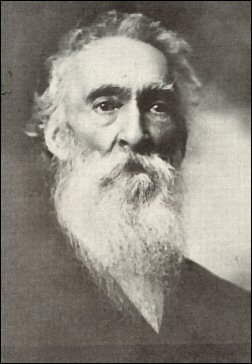 SAMUEL A. KINGMAN (1818-1904), fourth chief justice of the Kansas state supreme court, was the leader of the antifeminist forces at the Wyandotte constitutional convention. 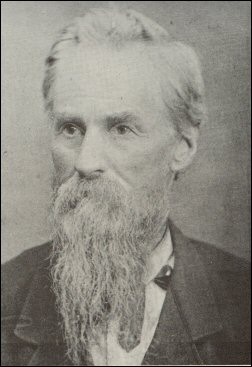 JOHN RITCHIE (1817-1887), a Republican leader in Kansas and Topeka, was one of the more vocal supporters of woman's rights in the Wyandotte constitutional convention.  WENDELL PHILLIPS (1811-1884), the famed abolitionist, was treasurer of the Francis Jackson Woman's Rights Funds and agreed to pay expenses in the early equality fight in Kansas. 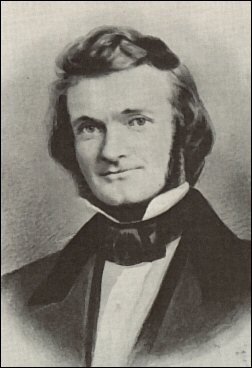 JOHN O. WATTLES (1813?-1859), a noted social reformer and antislavery lecturer in Ohio and Kansas, organized the Moneka Woman's Rights Association in Linn county in 1858. [TO SUSAN B. ANTHONY]
[58] CONSTITUTIONAL
HALL
Dear Susan
WYANDOTTE [KANSAS TERRITORY] July 16, [18]59 We are accomplishing
something practical besides creating a public sentiment
perfectly irresistible by politicians. When the Well we have presented 560
petitioners names and some 200 have been unaccountably I have spoken by invitation
before the I have labored with leading
men and parties & I wrote & got thru a
resolution instructing the I have drawn on your
brother for $50. I have spent 4 weeks in the field and am to
attend this Mr. [John O.]
Wattles is also laboring & a good & influential man.
[64] We will meet C. I. H. N. I shall write to your brother for $25 or 50 more in two weeks. [TO SUSAN B. ANTHONY]
[65] Con[stitutiona]l
Hall
Dear Susan
WYANDOTTE [KANSAS TERRITORY] July 21, [1859] I am still here laboring
with members and outsiders—directly or indirectly as
seems most politic—to advance our cause. [66]
Defeated as we are bound to be on the suffrage question
[67]—we will get better terms on legal
securities. Our right to hold, acquire and defend property
independent of husbands & to equal control of children
during their (entire) minority is passed
in a provision adopted (1st reading) and without a single
"nay." [68] There will be an effort to
change on a second reading by insisting "equal legal rights"
as under that phraseology we can reach the whole subject of I have again secured the
promise of an effort to get an exemption from taxes; also
the friends are prepared to try again for suffrage
submission thro' the Legislature. One branch of our friends
contend that our case is provided for under a provision
adopted, making a majority vote of the I propose to go out in two
weeks again & canvass the towns with reference to the
election of a right I shall get collections
when I can, & rely on the friends to secure my By urgent request from all
directions (members & citizens) I speak here again
tomorrow evening. [71] They say I have accomplished
a great change in public sentiment. I tell you because of
our mutual interest in the cause. O Susan
I thank God daily that with renovated strength, my
capability—& consequent success in the lecture
field is increased. I did poorest in Leavenworth
[72]—indeed I felt at home every where else.
It is the hardest place & yet the We want $25 of Whatever the friends
appropriate to Kansas will be faithfully & economically
used. We have our first We have 12 men,
thorough reformers in this C. I. H. NICHOLS P. S. I will drop a line often as any thing is done of interest in our direction. The poor colored man &
the indian have been cut off by "white"—the I think they will find
trouble even tho' they cited as precedents the decisions of
Ohio judges as according with this view. [77] But
what is not put in block characters on the pages of the [TO THE MEMBERS OF THE
WYANDOTTE CONSTITUTIONAL CONVENTION] [79] [WYANDOTTE,
KANSAS]
[To the Members of the Constitutional
Convention:]
[July 29, 1859] The ladies attending the sessions of this Convention beg leave to respond to the vote of thanks tendered this morning [80]—that they have been both pleased and profited by the debates and proceedings generally. And while they acknowledge themselves duly grateful for small favors from the Constitutional Board, they beg leave to say, that the very commendable self-respect of the members generally has relieved them from all unpleasant apprehensions as to the wisdom or the propriety of asking for the residue of "rights" on all suitable occasions." [81] C. I. H.
NICHOLS, et al. [TO SUSAN B. ANTHONY]
[82] [n. d.]
[Dear Susan:]
At Quindaro, Kansas in Dec.
[1859], I was arrested with several of my neighbors,
among them a Congregationalist Clergyman and his wife, his
deacon and wife, a Notary Public and an ex-Probate Judge,
for "kidnapping" neighbor Providentially, as it proved, I met her at the hotel when she landed and took her to my home. On learning her arrival D. at once gave notice that, if she resorted to the Courts for her children he would take them across the river (to Missouri) and applied for a writ—which he could have obtained under Vermont laws—to arrest me for "harboring" the wife he had turned out of doors, and for damages in loss of the personal services she owed him! In a private council of friends, the gentlemen advised that I with several other women, should go with the mother and take the children by force and they would go with and protect us from violence. As our Court would not be in session for some months and the Missouri State line was almost within a "stone's throw," this seemed to them the only alternative. Knowing the temper of the man and the penalties affixed to interference with the legal rights of fatherhood, I declined, but offered to appeal to the Legislature (the last under Territorial law) which was about to convene, [85] for divorce and custody of children for the mother. My proposal was cordially accepted, and armed with a statement of the case signed by them and others of our best citizens, I went to the Legislature and found my case barred out by the adoption (on the first day of the session) of a resolution to consider no cases of divorce involving the interests of children. [86] Having secured the sympathy
of leading "best men"—several of whom had voted
mother's rights in the Constitutional Convention—my
appeal was submitted to the House, and without a question
referred to the judiciary Committee before whom I was
notified to appear and did so with my friend, Mrs. Wm.
Hutchinson. In consideration of the resolution of the Legislature, which had been unanimous, I was required to procure testimony that would be satisfactory to the Courts, of the facts charged. "And now Mrs. Nichols," added Mr. [Charles] Sims, [89] the gentlemany [sic] democratic member—Chairman also, of the Enrolling Committee— "in procuring this testimony you will be necessarily detained here some weeks: would you like a Clerk-ship?" Blessed providence! Three dollars per day in scrip at 75¢ enabled me to stay and engineer the case without expense to the mother. And this was not all. A fellow boarder, Clerk in the Senate, was called home for a week, early in the session, by sickness in his family. Outside of my enrolling office hours, I made up for him the minutes of proceedings which were sent me from the Senate, and on his return I was appointed Assistant Clerk. [90] I am not cognizant of any earlier appointment of a woman to a Legislative Clerkship; and probably I am the only one who has filled a Clerkship in each branch at the same session. [Being a rapid penman, with a chirography legible as print, my judgment acquits me of any undue advantage in the arrangement.] Having received sufficient testimony, three days prior to the adjournment of the session, the Judiciary Committee reported a bill for divorce and custody of children. [91] Meantime every arrangement had been made for a quick passage through every stage of proceedings, from the Judiciary Committee to the signature of the Governor, and without having raised an opposing voice, it had reached the reading for its final passage in the Senate, when a member moved its "indefinite postponement," and gave as his reason, that "a gentleman of intelligence and position from Quindaro, had just informed him, that there must be some mistake in the matter, as the father of the children was a sober, intelligent man, had a good trade and was able to support them." The President of the Senate, [92] one of Kansas' best men, who had been a member of the Constitutional Convention and has now gone to his reward—being fully posted in the facts, vacated the Chair and with a few explanatory words, procured the reference of the bill to a special Committee, the chairman of which met me next morning in the Enrolling office. Providentially the "gentleman from Quindaro," a lawyer living outside of D's neighborhood, had just come in to copy a bill in which he was interested and I invited him to the conference. He confessed that he knew nothing of the case excepting what the father, who had commissioned him "to look after his interests," had told him of his wife's desertion of her little children; "which allegation"—the Committee significantly remarked—"is discredited by her coming for them from Maine to Kansas in the dead of winter." Having examined testimony from the East, which had come to hand after the report of the Judiciary Committee had gone to the House, and the statement over the signatures of his Pastor and several reliable citizens, D—'s counsel remarked, that "the woman ought to have her children and undoubtedly her bill will pass." Would you not feel better, I asked, as due both to her and to yourself, since you have arrested its passage, to formally withdraw your objections? "I do so, Mrs. Nichols," was his cordial response. And without another word, our conference bowed itself and each other out. [93] The Legislature had adjourned. The bill was in my pocket "signed and sealed," when my Quindaro friend—we had been friends from the first settlement of the town—who would reach home a day in advance of the mail conveyance by which I would return—called to inquire. if I had "any message to send." "Yes Sir, you can take a message that will relieve me of great anxiety. To prevent D. from getting those children over the Kansas border, it is necessary that the mother's friends get the first news of the divorce, and I want you to promise me on your honor to put this letter in judge C—'s hand before you risk a chance of meeting D." The letter was faithfully delivered and a watch set over D—'s domicile night and day, till tired of his jailor's office, he shouldered his rifle and took the Wyandotte road, convoying his children. Immediately Judge [C.] mounted his horse and armed with the requisite authority arrested him on the charge of abducting the children as he had threatened. The lawyer in whose office he was found, and whom he employed to defend his case, had a special engagement for the evening and proposed to defer the trial till the next day. The Judge had an engagement for the next day, but would be at liberty to attend to the matter the day after. This arrangement made, D. was taken back to Quindaro and placed under guard. The children in charge of an older half-sister—the father's deputy—were allowed to return home. Why were the children not put in possession of the mother at once? Such a course foreshadowed no end of delay and trouble, with more than the possibility of failure. A brief expose of certain local conditions will explain this. At that period in her history, Kansas though on the eve of admission to the Union, was as intensely political, in every fibre of her social structure, as when the slogan "Free Kansas" rallied to defence of the border. The return of escaped slaves (and even of free blacks) to Missouri for $100 to which such service was entitled by Mo. Statute law, [94]—was still accomplished surreptitiously, and often by aid of conspiring Kansas officials in the border towns. From its settlement Quindaro had been the Canada of the escaped slave and as such, obnoxious to the pro-slavery element of Wyandotte, which was outvoted at the polls and oftener outwitted on the underground rail-road, by what it was pleased to term, "the philanthropy of Quindaro." [95] This philanthropy, which had fed the children, was now resolutely set for the defence of the mother's claims, and D., despairing of neighborhood sympathy, had appealed to the hostile element in our Sister City—represented in this instance by our official Prosecuting Attorney and two legal assistants. [96] Kansas law being on the mother's side there was no doubt that, whatever might be the outward seeming, strategy in which practice had made them formidable opponents, was to be the final if not the first resort. [97] From Kansas to Maine were 1500 miles—eight states—in every one of which the statute and Common Law right of custody, would deliver the children to the father in defiance of the natural claim of the mother and her Kansas right of custody. It had not been long since a reluctant Kansas Court had delivered to a Massachusetts father two little girls which a Massachusetts Court had decreed to the tender, capable mother with a divorce from the irresponsible father. But this Kansas law which would fail the mother in a contest outside the State, was an efficient protection to the "Quindaro Philanthropists" against prosecution for aiding the mother in getting possession of her children. In view of all the facts our arrangements included an underground rail-road to a given point on the homeward journey, and secrecy and despatch in the embarkation. Twenty four hours time; the close custody of D., and the removal of the sister's surveillance—conditions necessary to the quiet and successful carrying out of our program—had been secured by delay of the trial and failure of D. to get bail among his neighbors. The day after his arrest, D.—in order to procure bail—was forced, as had been anticipated, to send the sister with a request to this end, to his Wyandotte counsel. Our opportunity thus secured, eight of us repaired to the neighbor's where the children had been left and were politely received. Our Pastor presented the divorce act and introduced the mother whose pathetic "I want my children; please step aside and let me go in," procured us lawful entrance to the presence of the children in an interior room. In less than an hour we had them in my home, washed and dressed in warm, beautiful suits neatly fitted and brought by the mother from her eastern home. "When night let her curtain down, and pinned it with a star," a little band of the rescuers took mother and children by a blind and solitary path to a deserted mill on the river's bank below the village landing,. Here the hoot of a domesticated owl, brought a farmer and his boat from the opposite shore—where our next neighbor, who had removed his household goods to Missouri, awaited mother and children (with his wife and covered wagon) all unsuspected, to convey them forty miles across the country to an intermediate station on the Hannibal and St. Jo. Railroad. Scarcely had we sat down, relieved and happy, to our delayed tea—for we had been too engrossed in momentous preparations to think of eating—when the Wyandotte Attorneys with Sheriff and posse, came for the children. "They were here this P. M. but they are not here now," was the frank response of Judge C. "Then where are they." "I cannot tell you." Just then a Mo. river boat whistled at the landing, and without pausing to say "good night," they rushed down the street to search for their game in the boat. Three days they watched our movements from the surrounding heights, thinking we had secreted the children, a delusion which as it secured the escape of the mother and little ones, we took reasonable care not to dispel. On the fourth day we were arrested for breaking into the premises and kidnapping the children. After a notable trial of three days continuance, the Justice before whom we were brought, decided that the charges were not sustained, but at the instance of the prosecution he ordered us bound over for trial to the regular term of Court, to "test the constitutionality of that divorce," as he explained when I inquired on what ground. [98] And this was the end, for the Grand Jury found "No Cause." [99] And mother and children arrived safely at their Maine home. If the sympathies of the children had been with the mother, their rescue could have been accomplished at once, but probably at the cost to us of a malicious and expensive prosecution. A meeting arranged without knowledge of the children proved the impossibility of securing their co-operation. Recognizing their mother, they fled at break-neck speed in the "home stretch." They had been taught, that her attempts to poison them were the cause of their father's emigration and change of name, and that she would put them in a factory at the East, where recently one had fallen and buried hundreds of women and children in its ruins. [100] When they were drawn from their concealment, wild with terror, screaming, biting and scratching their captors, not one of us would have admitted the possibility of a result to make us regret our part in the affair; but were we not more than paid when the happy mother wrote us from her home, that on the third night of her journey, at a hotel where they stopped over to rest—she had slept between them—a little sunny head on each arm, because neither was willing to be separated from her! [C. I. H.
NICHOLS] [POEM IN LAWRENCE
REPUBLICAN] [101] [January,
1860]
THE
MAN HUNT.
C. I. H. N. [TO T. DWIGHT THACHER]
[102] [LAWRENCE,
KANSAS]
[January 29, 1860] KANSAS LEGISLATURE.—This roving body has finally gone back to Lawrence, as will be seen by the proceedings in another column, copied from the Leavenworth Herald and Times. The everlasting Mrs. Nichols and her yoke mate, Miss Grant, are on hand for the purpose of participating in the affairs of State. [103] These strong minded women are some on foot, if they can keep up with the migratory body. These masculine women, who are not satisfied with their physical condition, but aspire to man's estate, should be encouraged. They are prepared to resign their knitting work, and take upon themselves the business of legislation. They pray that a law may be enacted making them equal to men—and superior in certain cases, and their petition has been referred to the Judiciary Committee. [104] Whether this legislation will arraign the wisdom of Providence, and repeal an ordinance of Nature, remains to be seen. [105] Messrs. Thacher: The above racy paragraph is clipped from the Atchison Union. [106] Your correspondent respectfully asks its insertion in your columns for the benefit of all whom it may concern. As an assurance of pleasant regard and sympathy for the gentlemanly author, we tender him our autograph; also, if he will furnish yarn, (the times are hard) we will cheerfully engage to keep him stockinged until superseded in our labor of benevolence by some less aspiring, knitting machine, only asking in return that he will send us his paper whenever the spirit moves him to pleasant notices of the "strong minded women." [107] In answer to his query as to the probability of the Legislature's "repealing the ordinances of nature," we think it not likely, while "Jefferson's Manual" [108] holds out. Respectfully, C. I. H. NICHOLS [TO T. DWIGHT THACHER]
[109] [April, 1860]
Messrs. Thacher:—
The world moves, and men and women move with it. It will be a source of gratification to many of your readers, and to the majority of the Wyandot Constitutional Convention, to learn that the Legislature of the great and intelligent State of New York has placed itself even, at least, with Kansas, in the securing to woman her natural rights. [110] The [New York] Century says: "We have great cause to be proud of a Legislature that can at the same time defeat an iniquitous railroad scheme, and pass such a law as that which we have now the pleasure to announce, on the subject of 'Woman's Rights.'" [111] The bill provides— 1. That the property, both real and personal, now held by any married woman in the State of New York, in her sole right, or any that may come to her by descent, bequest, gift or grant; and all property that she may acquire by labor, or by trade carried on for her own account; and all rents and proceeds of property to which she has a right prior to marriage—shall be and remain her sole property, not liable for her husband's debts, and free from his control. "Such," adds the Century, "are the provisions of this excellent law—as it may be considered, since it is sure to receive the Governor's signature," &c., &c. Respectfully, C. I. H. NICHOLS [TO SUSAN B. ANTHONY]
[113] [n. d.]
[Dear Susan:]
In the winter of 1861 I
lectured in Massilon, Ohio. [114] A dozen women of
the audience had gathered around me on the spacious platform
in interested discussion when up thro the aisle of the empty
hall came half a dozen young men faces and eyes aglow with
repressed humor, foremost was a youth grave, beardless,
buttoned up, gloved, crowned with a stove-pipe hat &
swinging a cane evidently a volunteer leader of the younger
and very good-looking, respectable, youth,
apparently grown in healthy conditions of sun, air and home
love. I took in the picture & its meaning at a glance. I
turned to the ["]What can I do for you, Sir. Would
you like some of my tracts?["] "No madam. I
understand you have been advocating women's voting?" "Yes.
Have you any objections?" "Yes, women ain't capable of
understanding politics. They're mental facts are inferior to
men." "Perhaps Sir, you are right. But it is a principle "How can the old better serve the young than by imparting lessons of wisdom themselves have learned in the search for life's desirable"— Not much can be said in the Album's page. But I remember a few lines written in my own by a man of middle age for whom I had a great respect that often recurred to me especially in the early years—to shape my conclusions and directing my acts—for which I see increased as years pass I feel increased value. These were the words— "Remember it's the little fox that spoils the vine" & this was his application—small cares, petty worries & petty aims harrass and belittle the soul & prevent a luscious fruitage of worthy enjoyments. Great trials, bereavements & disappointments to overcome are powers of endurance and energies increase our powers to cope with the stern realities of life and if we resort to the health of faith we emerge into an atmosphere purer, brighter & more invigorating than before. [C. I. H.
NICHOLS] [TO SUSAN B. ANTHONY]
[115] [n. d.]
[Dear Susan:]
After one of my lectures in Ohio, in 1861, my attention was directed to a bright boy of 8 years whose mother had recently died, possessed in her own right of a valuable farm inherited during her second or last marriage. Under the laws of that State, her husband, step-father to the boy, controlled the estate during her life and at her decease became entitled to its use during his life as "tenant in curtesy." [116] The stepfather, a man some 35 years of age, sold his "life interest" in the estate at her decease and left the State—and the boy unprovided for! The child had no kinsfolk,
but a friend of his parents took him in with his own
children and saved him from the poor house. If he outlives
his young step-father, the boy will come into possession of
his mother's property. The State to enrich the man had
paupered the helpless boy! Every mother who reads this will
feel in her soul the reflected agony of the mother who with
an ample property could not protect the necessaries of life
to her only child. For all that the world knew this man had
been a kind husband and kind to the child. Perhaps, as she
could do [C. I. H.
NICHOLS] [TO THE EDITOR OF THE CHICAGO
DAILY TRIBUNE] [118] ATCHISON,
March 8, 1861 [Dear Editor:]
Having promised friends at different points in Wisconsin, Ohio, and Illinois, [119] where I have been spending the winter to communicate in reference to the needs and relief supplies of Kansas. [120] I have availed myself of the opportunity to spend a few days at Atchison, where I am kindly welcomed to every department connected with this subject. [121] Economy of time and labor suggests your columns as furnishing the widest and speediest means of communication. Some fifteen clerks are employed from dawn to late hours at night in receiving and distributing, posting and reporting, besides the labor of Mrs. [Lucy Gaylord] Pomeroy [122] and others in the General's family. There is no time for waste words; everything works by rule, from the little post-boy to the "General" head of the whole operation. Mrs. Pomeroy gives her entire energies to the work. Three times a day the mail matter is brought to her from the Post Office. She opens and reads each letter, while a lady assistant, with pen in hand, makes memoranda of name and address, and contents to be noted or acknowledged. These letters are then assorted with reference to contents, and passed to clerks of the several departments, and such as require the General's own attention, are retained and placed in his hands, or read to him by Mrs. P., who again takes orders as to their disposition, replies, &c. All express packages of money are received and opened by Gen. P. All remittances by mail are received and acknowledged by Mrs. P. in her home department. I have just returned from visiting the warehouses, piled up with stores, coming and going like the manna that fed the Israelites. Grain for seed and for consumption, flour, beans and dried fruit, with groceries, medicines, garden seeds and clothing, are seen in apparent abundance, and yet the demand is greater in some departments than the supply. Many teams go empty away for want of seed grain, which has been slow in getting here. But a large quantity is being freighted. If only freight facilities were equal to the pressing necessity of the season! Many have put in their wheat, and more would have been in had the seed been on hand. Supplies have each their own separate department, with capable and faithful clerks to fill orders, &c. Gen. P. occupies a central office, a prisoner from "early to late," to the representations of the starving hosts of Kansas. From the railroad and river crossing opposite, we have a full view of teams, warehouses, and the General's office, with its crowd of applicants outside waiting their turn to be heard. In company with a friend, I got a seat inside the General's office. The General stood on his rude counter, calling from a paper in his hand the names of counties, towns and neighborhoods, where applications had been passed upon, each in their order. A clerk at his side read and delivered the orders as called for, to the applicants of the several sections, who left gladly to load their waiting teams with bread and clothing for loved ones, perhaps ready to perish. When the orders of successful applicants are disposed of, fresh applications are received. A person looking and listening in such a crowd as was here assembled, has little need to ask after the needs of the population represented. Men with clothing just falling in tatters from their limbs, others with pants made of the stout "seamless" grain sacks; others with garments parti-colored, and others still indicating that feminine clothing has been converted into covering for the messengers of the naked and the hungry—and all exhibiting that pinched and anxious look born of recent suffering or stern conflict with privation. Familiarity with such scenes soon settles a leaden weight upon heart and brain, benumbing both, and sending one mechanically on the round of supply duty. Another feature of this suffering, as it appeals powerfully for dried fruits, I may not pass without the word "in season." Dr. [John W.] Robinson, [123] Secretary of State, who—it may not be known to many of your readers—is an experienced physician, left here a few days since, after spending some days in familiar intercourse with the applicants for relief. He reports that three out of four are affected with the scurvy, some to the extent that their teeth could be taken out with the fingers. I shrink from the almost certain sickness which threatens the exhausted physical energies of this people when the labor and the heat of the coming season shall press upon them. But I must close with an expression of hearty sympathy in the spirit and general tone of your paper, and hearty thanks for its championship of suffering Kansas. MRS. C. I. H.
NICHOLS [POEM ABOUT BRIG. GEN. NATHANIEL LYON AND
THE MISSOURI CAMPAIGN] [124] [1862] [C. I. H.
NICHOLS]
[TESTIMONY TO THE MEMORY OF LUCY
GAYLORD POMEROY] [134] [QUINDARO,
KANSAS]
[1863] No brief and hasty tribute from the friends who knew her best, and loved her most, can do justice to the strength, purity and practical benevolence of her character. It was true of her, that she "did with her might what her hand found to do." Much was certainly due to the opportunities of her position; but to me it seemed more the qualities of her womanly heart that found so much and so varied work in the cause of humanity. Rarely do we find combined the persistency, the efficiency, and denial of self with which she ministered purely human needs. And few are they who have left so bright a record of faithful and judicious friendship, who have developed the quick sympathy, keen sense of justice, and high moral courage, which made her an impartial critic, and the advocate of those who could not defend themselves. The opportunity comes not to many men in a generation to impress themselves on the grateful memory of a whole people; to woman, fewer still. Our friend was one of the royal few whom opportunity crowned, and found worthy of the sacred trust. Her influence was largely felt in aid of religious and educational efforts. She cheered the despondent, assured the doubtful, and comforted the unfortunate. Her field of usefulness continued to widen and extend as the good Providence of God and human needs met in her faithful hands. [C. I. H.
NICHOLS] [TESTIMONY TO THE MEMORY OF LUCY
GAYLORD POMEROY] [135] [QUINDARO,
KANSAS]
[1863] YEAR OF
FAMINE.
The year 1860 was remarkable in Kansas history. The rains of heaven were withheld, and the fields yielded no increase. Early in September it became apparent that nothing short of abundant supplies from the benevolence of the free States could save Kansas from depopulation, by migration on the one hand, or starvation on the other. Long trains of settlers, accompanied by their farm stock, blocked the travelled routes, seeking permanent or temporary homes and subsistence in adjoining States. Individuals and families freighted the great thoroughfares to throw themselves on the kindness of friends in some distant localities, or to labor where there was "bread enough and to spare." All over Kansas were vacant homes, telling of an invader more terrible than "border ruffians," backed by a semi-traitorous administration. To those who could not retreat, the heavens prophesied a winter of despair, sickness and starvation. [136] It was at this crisis of affairs that meetings of the people were called, and a 'general relief agency' formed, to which Mr. [Samuel C.] Pomeroy was unanimously elected, with full power to solicit, receive and disburse contributions, to meet the general destitution. [137] The choice was a happy one. Mr. Pomeroy's experience as agent of emigration obviated all delay, and he was able at once to collect and put the requisite agencies in working order. Such was the magnitude of the suffering eventually revealed and ministered to, through this organization, that to the latest period of our history it will excite wonder and gratitude, that so great a calamity as would have been the depopulation of Kansas was averted. In reviewing briefly the agencies employed by Mr. Pomeroy, we detract nothing from the merit of his great services in giving his noble wife the credit of having been equal to the position she held as his ever-present helper in the good work. The agency doubtless owed its singular efficiency to the admirable fitness of the 'united head.' If either of the parties had been wanting in this emergency, it is more than probable that much of the comfort which clung as a sweet aroma to the distributed gifts on the one hand, and the substantial encouragement which accompanied the means of future harvests on the other, would have been lacking to the completeness of this great benevolence. But the facts of Mrs. Pomeroy's life, on which our estimate of her capability and her worth is based, would be too voluminous for a brief memorial, and not easily fathered, since, with characteristic reticence, she put most of her correspondence and written thoughts beyond the reach of a biographer. [138] [C. I. H.
NICHOLS] [TO SUSAN B. ANTHONY]
[139] QUINDARO,
KANSAS
My Dear Miss Anthony:—
May 4, 1863 Your call [140] to the loyal women of the nation meets my hearty response. I have been feeling for months that their activities, in the crisis which is upon us, should not be limited to the scraping of lint and concocting of delicacies for our brave and suffering soldiers. Women, equally with men, should address themselves to the removing of the wicked cause of all this terrible sacrifice of life and its loving, peaceful issues. It is their privilege to profit by the lessons being taught at such a fearful cost. And discerning clearly the mistakes of the past, it is their duty to apply themselves cheerfully and perseveringly to the eradication of every wrong and the restoration of every right, as affecting directly or indirectly the progress of the race toward the divine standard of human intelligence and goodness. No sacrifice of right, no conservation of wrong, should be the rally-call of mothers whose sons must vindicate the one and expiate the other in blood! Negro slavery is but one of the protean forms of disfranchised humanity. [141] Class legislation is the one great fountain of national and domestic antagonisms. Every ignoring of inherent rights, every transfer of inherent interest, from the first organization of communities, has been the license of power to robbery and murder, itself the embodiment of a thievish and murderous selfishness. That the disenfranchisement of the women of '76 destroyed the moral guarantee of a pure republic, or that their enfranchisement would early have broken the chains of the slave, I may not now discuss. Yet it may be well to note that ever since freedom and slavery joined issue in this Government, the women of the free States have been a conceded majority, almost a unit, against slavery, as if verifying the declaration of God in the garden, "I will put enmity between thee (Satan) and the woman." Every legal invasion of rights, forming a precedent and source of infinite series of resultant wrongs, makes it the duty of woman to persist in demanding the right, that she may abate the wrong—and first her own enfranchisement. The national life is in peril, and woman is constitutionally disabled from rushing to her country's rescue. Robbery and arson invade her home; and though man is powerless to protect, she may not save it by appeals to the ballot-box. A hundred thousand loyal voters of Illinois are grappling with the traitors of the South. If the hundred thousand loyal women left in their homes had been armed with ballots, copperhead treason would not have wrested the influence of that State to the aid and comfort of the rebellion. If the women of Iowa had been legally empowered to meet treason at home, the wasteful expense of canvassing distant battlefields for the soldiers' votes might have been saved. And it would have been easier for these women to vote than to pay their proportion of the tax incurred. Yankee thrift and shrewdness would have been vindicated if Connecticut had provided for the enfranchisement of her women by constitutional amendment, instead of wasting her money and butting her dignity against judicial vetoes in legislating for the absent soldiers' vote. This war is adding a vast army of widows and orphans to this already large class of unrepresented humanity. Shall the women who have been judged worthy and capable to discharge the duties of both parents to their children, be longer denied the legal and political rights held necessary to the successful discharge of a part even of these duties by men? With these few hasty suggestions, and an earnest prayer for the highest wisdom and purest love to guide and vitalize your deliberations, sisters, I bid you farewell. [142] C. I. H.
NICHOLS. (Part Four, the Clarina I. H.
Nichols Papers of 1867-1868,
Will Appear in the Winter, 1973, Issue.)
JOSEPH G. GAMBONE is a member of the manuscript and archives staff of the Kansas State Historical Society. He wishes to acknowledge his indebtedness to Vivian Bryan, Vermont State Library at Montpelier, T. D. Seymour Bassett, University of Vermont at Burlington, and Eva J. Leech, Brooks Memorial Library at Brattleboro, Vt., for their assistance in gathering these papers. 1. Quindaro Chindowan, May 23, 1857. After her
return to Kansas in March, 1857, Mrs. Nichols settled at
Quindaro, a new townsite on the south bank of the Missouri
river in Wyandotte county, about six miles above Kansas
City. She became associate editor of the Chindowan,
a weekly Free-State journal that began publication on May
13, 1857. In announcing Mrs. Nichols's appointment, John M.
Walden, editor of the Chindowan, stated: "It is
well known in the East that Mrs. N. has become earnestly
engaged in the cause of Freedom in Kansas. We take pleasure
in announcing that her influence will be exerted through our
columns in behalf of this great cause."—Ibid.,
May 13, 1857. 2. Mrs. Nichols refers here to John M. Walden, editor of
the Chindowan, who was only 26 years old and an
ardent abolitionist. For a biographical sketch, see
James Grant Wilson and John Fiske, eds., Appleton's
Cyclopaedia of American Biography, v. 6 (New York, D.
Appleton and Company, 1889), p. 320. 3. For additional information on the early history of Quindaro, see Alan W. Farley, "Annals of Quindaro: A Kansas Ghost Town," KHQ, v. 22 (Winter, 1956), pp, 305-320; Blackmar, Kansas: A Cyclopedia of State History, Embracing Events, Institutions, Industries, Counties, Cities, Towns, Prominent Persons, Etc., v. 2, pp. 528-530; Herald of Freedom, January 10, 1857; Lawrence Republican, June 4, July 16, 1857; Quindaro Chindowan, May 13, June 12, 1857. 4. Ibid., May 30, 1857. 5. Ibid., June 13, 1857. 6. Mrs. Nichols refers here to the June 15, 1857, election of delegates to the Lecompton constitutional convention. The Free-State men refused to participate in the election because the incomplete territorial census and rigged election procedures denied them their rights, and they announced their determination to continue their policy of passive resistance against the policies of the Democratic administration. For additional information on the Free-State position and the delegate election, see Nevins, The Emergence of Lincoln (New York, Charles Scribner's Sons, 1950), v. 1, pp. 152-155, 161-162; George F. Milton, The Eve of Conflict: Stephen A. Douglas and the Needless War (Boston, Houghton Mifflin Company, 1934), pp. 264-266; Andreas and Cutler, History of the State of Kansas, pp. 158-160. 7. The territorial census of 1857 was incomplete as only slightly more than 9,000 adult males, out of an estimated 20,000, were registered. The census was not taken in many of the interior counties, where Free-State sentiment was strong. Gerrymandering of election districts gave those counties on or near the Missouri border the largest number of delegates to the constitutional convention. For additional information on the census, see "Governor Walker's Administration," KHC, v. 5 (1891-1896), p. 315; Wilder, Annals of Kansas, p. 162; Andreas and Cutler, History of the State of Kansas, p. 158. 8. On June 9, 1857, the Free-State convention was held in Topeka. It endorsed the Topeka constitution, declared the territorial laws invalid, and urged the Free-State men not to participate in the Proslavery constitutional movement. 9. The Proceedings of the Free-State convention were published in the Chindowan, along with Walden's editorial on Free-State Policy.—See Quindaro Chindowan, June 13, 1857. 10. Ibid. 11. Henry Ward Beecher, the fanatical abolitionist clergyman, was one of the most conspicuous and controversial figures in public life. From his pulpit at Plymouth church in Brooklyn, N. Y., Beecher became a spokesman and symbol of the antislavery crusade. For additional biographical information, see DAB, v. 2, pp. 129-135; Paxton Hibben, Henry Ward Beecher, An American Portrait (New York, George H. Doran Company, 1927); Lyman Beecher Stowe, Saints, Sinners and Beechers (New York, Blue Ribbon Books, 1934). 12. Quindaro Chindowan, June 20, 1857. 13. Ibid. 14. The Wyandot reserve was cradled between the Missouri and Kansas rivers, east of the Delaware reservation. For a map showing the Wyandot reserve in 1854-1855, see Gates, Fifty Million Acres: Conflicts Over Kansas Land Policy, 1854-1890, p. 23. 15. On January 31, 1855, a treaty was signed investing the Wyandots with the rights of citizenship under the laws of the United States. For additional information, see Charles J. Kappler, Indian Affairs, Laws and Treaties, v. 2 (2d rev. ed., Washington, Government Printing Office, 1904), pp. 677-681; Abel, "Indian Reservations in Kansas and the Extinguishment of Their Title," pp. 97-98. 16. In July, 1843, under arrangements made in a treaty signed March 17, 1842, the Wyandots migrated to Kansas. They were to receive 148,000 acres west of the Mississippi river, a perpetual annuity of $17,500, school funds of $500 per year, and payment of tribal debts amounting to $23,860. For additional information, see Kappler, Indian Affairs, Laws and Treaties, v. 2, pp. 534-537; Abel, "Indian Reservations in Kansas and the Extinguishment of Their Title," pp. 85-86; Homer E. Socolofsky, "Wyandot Floats," KHQ, v. 36 (Autumn, 1970), pp. 243-245; Carl G. Klopfenstein, "The Removal of the Wyandots From Ohio," Ohio Historical Quarterly, v. 66 (April, 1957), pp. 119-136. 17. According to the treaty signed on April 1, 1850, the Wyandots relinquished all claims to those lands assigned to them by the treaty of 1842, and accepted payment by the federal government of $100,000, to be invested in government stock at five percent per annum, and $85,000 to be paid to them or on their drafts. For additional information, see Kappler, Indian Affairs, Laws and Treaties, v. 2, pp. 587-588; New York Daily Tribune, April 19, 1850. 18. According to the 1855 treaty, "competent" Wyandots were to be entrusted with the control and management of their affairs and interests, and their patents "shall contain an absolute and unconditional grant in fee-simple." Those Wyandots "not so competent" were to be given patents to their allotments for five years; thereafter those allotments could be sold only with the approval of the President.—See Kappler, Indian Affairs, Laws and Treaties, v. 2, p. 679. 19. For additional information on Wyandot lands, see Socolofsky, "Wyandot Floats," pp. 241-304; "Wyandot and Shawnee Indian Lands in Wyandotte County, Kansas," KHC, v. 15 (1919-1922), pp. 103-180. 20. Quindaro Chindowan, June 20, 1857. 21. Mrs. Nichols's petition was presented at a public meeting that was held on June 16, 1857, to discuss the "doggeries" which had "covertly opened" in Quindaro. A vigilance committee was appointed "to search out the doggeries and destroy the liquors found about them."—Ibid. 22. Ibid., June 27, 1857. 23. On the morning of June 17, the vigilance committee of Quindaro assembled and proceeded to rid the community of its "evil liquor" and "rum-selling" establishments. Kegs of whiskey and brandy were found at three separate locations and destroyed. In response to this community action, the Chindowan asserted: "In performing this task the committee only destroyed such liquors as it was evident the proprietors kept for sale. Ale and beer were not interfered with. It was only whiskey, brandy and such liquors that were doomed. No personal violence was offered to the persons engaged in this nefarious traffic. It has been from the first the prevailing sentiment in Quindaro that no rummeries should be allowed to exist here; of this every person had been duly warned, which warning not being heeded we are glad to record that our citizens have made a law unto themselves and abated the vilest nuisances that can curse a place."—Ibid., June 20, 1857. For another account of the liquor raids in Quindaro, see "Crayon" to the editor, Quindaro, June 17, 1857, cited in Daily Missouri Democrat, St. Louis, June 22, 1857. 24. The 1859 territorial legislature passed a liquor license law that restrained dram shops and taverns, and regulated the sale of liquor.—See General Laws of the Territory of Kansas, 1859, pp. 553-556. 25. Quindaro Chindowan, June 27, 1857. 26. Ibid., July 4, 1857. 27. John Randolph, a Virginia planter and member of congress, was noted for his flamboyant oratorical defense of state's rights. Although he deplored the institution of slavery, he passionately insisted on its constitutional safeguards. For an excellent biographical sketch, see DAB, v. 15, pp. 363-367. 28. Quindaro Chindowan, July 11, 1857. 29. Ibid., July 18, 1857. 30. Thomas H. Webb, a native of Providence, R. I., was a graduate of Harvard Medical School. He was secretary of the aid company from its inception in 1854 to his death in 1866. For additional information on Webb, see Johnson, The Battle Cry of Freedom, pp. 13-14, passim; George W. Martin, "The First Two Years of Kansas," KHC, v. 10 (1907-1908), p. 122. For additional information on Webb's visit to Kansas, see Herald of Freedom, October 3, 1857; Webb to B. B. Newton, Lawrence, September 26, 1857, "William H. Isely Papers," manuscript division, KSHS; Samuel C. Pomeroy to Thaddeus Hyatt, Atchison, August 17, September 26 [1857], "Hyatt Papers." 31. Quindaro Chindowan, August 1, 1857. 32. In response to Mrs. Nichols's letter, J. M. Walden wrote: "We are free to confess to our friends that in parting with the assistance of our Associate we are being deprived of aid that would have given to the Chindowan a character which we, alone, cannot hope to maintain for it. We need not state that Mrs. Nichols merits the reputation as a writer she has earned by many years of effort—we only hope that she may yet realize such rewards as belong to the talented and industrious."—Ibid. 33. Vermont Phoenix, October 31, 1857. In publishing Mrs. Nichols's letter, the editor asserted that it would throw some light upon the manner in which the democrats sought to overcome the Free State sentiment in Kansas." 34. The territorial elections were held on October 5-6, 1857. The Free-State party actively participated in the elective process and was successful in electing Marcus J. Parrott as the delegate to congress. Although it appeared that the Proslavery party had carried the territorial legislature, it became evident that fraudulent voting had been committed. After Governor Walker rejected the illegal votes, the Free-State men had also carried the legislature, electing nine of 13 members to the territorial council and 24 of the 39 members of the lower house. For additional information on the 1857 territorial elections, see James P. Shenton, Robert J. Walker: A Politician From Jackson to Lincoln (New York, Columbia University Press, 1961), p. 172; Nevins, The Emergence of Lincoln, v. 2, pp. 173-175; Roy F. Nichols, The Disruption of American Democracy (New York, Macmillan Company, 1948), pp. 118-121; Andreas and Cutler, History of the State of Kansas, pp. 162-163. 35. On August 26, 1857, a Free-State convention was held at Grasshopper Falls in Jefferson county. At this meeting it was agreed that the Free-State men would participate in the October election. For additional information, see ibid., p. 162; Robert G. Elliott, "The Grasshopper Falls Convention and the Legislature of 1857," KHC, v. 10 (1907-1908), pp. 182-189. 36. Robert J. Walker was appointed territorial governor in April, 1857. Although an administrative Democrat, he attempted to handle the controversial Kansas question judiciously and to encourage the active participation of the Kansas settlers on all questions relating to the formation of a state government. Throughout his administration, Walker suffered heavy criticism from both Proslavery and Free-State partisans. For additional information on Walker's administration, see Shenton, Robert J. Walker: A Politician From Jackson to Lincoln, pp. 150-184; George D. Harmon, "President James Buchanan's Betrayal of Governor Robert J. Walker," Pennsylvania Magazine of History and Biography, Philadelphia, v. 53 (1929), pp. 51-96; "Governor Walker's Administration," KHC, v. 5 (1891-1896), pp. 290-464. 37. Prior to the October elections, Governor Walker only ordered troops to be stationed at voting precincts in Leavenworth, Easton, and Kickapoo.—See ibid., pp. 310-314. 38. Kickapoo was a Proslavery stronghold in Leavenworth
county. Even though federal troops were stationed at the
polls, illegal voting occurred. For newspaper commentary on
the Kickapoo voting frauds, see Quindaro
Chindowan, October 10, 17, 1857. 39. Mrs. Nichols refers here to a Proslavery meeting that was held in Quindaro on September 29, 1857. For a synopsis of the meeting, see Quindaro Chindowan, October 3, 1857. 40. The three Proslavery (Democratic) candidates were John A. Halderman, George W. Purkins, and Hampton B. Denman. For biographical sketches of Halderman and Denman, see "Biographies of the Members of the Free-State Legislature of 1857-'58," KHC, v. 10 (1907-1908), p. 206; "Biographies of Members of the Legislature of 1861," ibid., pp. 238-239. Purkins was a lawyer from Leavenworth who was a successful candidate for probate judge in 1857. No additional biographical information on Purkins has been found. 41. Mrs. Nichols refers here to Alson C. Davis, a Free-State Democrat, who was a candidate for the territorial council. For additional information on Davis, see "Biographies of the Members of the Free-State Legislature of 1857-'58," p. 205; Quindaro Chindowan, October 3, 1857; Wyandotte Citizen, October 17, 1857. 42. According to the Quindaro Chindowan, Governor Robinson "made an able speech in which he held up in no favorable light the sophistry which had burdened the Pro-slavery speeches; exposed the game by which they are laboring to pull the wool over voters' eyes; demonstrated by their own assertions that the slavery question is the great issue before the people; showed the necessity of the Free-state party presenting a united front; and urged them to cast their influence and votes with the party and for the men that now as in the past were alone in favor of Freedom."—Ibid. 43. Mrs. Nichols refers here to John A. Halderman who was a candidate for the territorial council and not probate judge. For Halderman's remarks, see ibid. 44. Oxford precinct in Johnson county polled 1,628 Proslavery votes in the October election. Most of them were illegal and were thrown out by order of Governor Walker. According to the territorial census of 1857 only 496 voters resided in Johnson county.—See "Governor Walker's Administration," pp. 316-317, 402-406; "Kansas Territorial Census, 1857." 45. Frederick P. Stanton, an administrative Democrat, was appointed secretary of Kansas territory in April, 1857. He supported Governor Walker's position on the election frauds and joined with him in issuing a proclamation rejecting the fraudulent election returns. For additional information on Stanton, see "Address of Ex-Governor Frederick P. Stanton," KHC, v. 3 (1881-1884), pp. 338-358; "Governor Walker's Administration," ibid., v. 5 (1891-1896), pp. 403-406; DAB, v. 17, pp. 523-524. 46. Unfortunately Mrs. Nichols's papers for 1858 are not
extant. Although details of her activities are rather
sketchy, she was actively involved in organizing the woman's
rights movement in the territory during 1858 and carried her
crusade across the border into Missouri. For additional
information on Mrs. Nichols's activities in 1858,
see "Minute Book of the Moneka Woman's Rights
Association, 1858-1860," "Linn County History Papers";
Quindaro Chindowan, January 23, 1858; Susan E.
Wattles to Nichols, Moneka, May 4, 1858, in the private
collection of Mrs. Rabinovitz; HWS, v. 1, pp.
194-197. 47. ALS in the private collection of Mrs. Rabinovitz. 48. Mrs. Nichols refers here to Daniel Read Anthony who had migrated to Kansas in 1854 under the auspices of the New England Emigrant Aid Company. After a brief stay in the territory, he returned to Rochester, N. Y., where he engaged in the insurance business. In the summer of 1857 he decided to return to Kansas and settled in Leavenworth. Unlike his older sister, Daniel Anthony was skeptical on the question of woman's rights. For additional biographical information on Anthony, see The United States Biographical Dictionary, Kansas Volume, pp. 56-63; Portrait and Biographical Record of Leavenworth, Douglas and Franklin Counties, Kansas, pp. 145-146; Barry, "The Emigrant Aid Company Parties of 1854," pp. 117, 119-121; Edgar Langsdorf and Robert W. Richmond, eds., "Letters of Daniel R. Anthony, 1857-1862," KHQ, v. 24 (Spring, Summer, Autumn, and Winter, 1958), pp. 6-30, 198-226, 351-370, 458-475. 49. The Wyandotte constitutional convention was to
convene in July, 1859, for the purpose of framing a
Free-State constitution. Mrs. Nichols was to attend the
convention as a representative of the Moneka Woman's Rights
Association and to petition the delegates for the inclusion
of woman's rights provisions in the new constitution. 50. Shortly before her letter to Miss Anthony, Daniel
Anthony had mailed $25 to Mrs. Nichols.—See
D. R. Anthony to "Dear Sister [Susan]," Leavenworth,
June 13, 1859, "Daniel R. Anthony Papers," manuscript
division, KSHS. 51. Susan E. Wattles was the wife of Augustus Wattles, a
radical abolitionist who was involved in many of the border
skirmishes in southeastern Kansas during 1856-1858. Mrs.
Wattles helped to organize the Moneka Woman's Rights
Association in Linn county in February, 1858, and worked
closely with Mrs. Nichols during the 1859 woman's rights
campaign. For additional information on Mrs. Wattles and the
Moneka association, see Wattles to "My Dear Sister
[Jane Swisshelm]," Rural, Ohio, May 18, 1849, cited
in Pittsburgh (Pa.) Saturday Visitor, May 26, 1849;
Kanzas News, October 10, 1857, March 13, 1858;
Herald of Freedom, March 6, 1858; Freeman's
Champion, March 18, 1858; "Minute Book of the Moneka
Woman's Rights Association, 1858-1860," Linn County History
Papers." 52. In her reminiscences, Mrs. Nichols wrote: "I believe
then and believe now that Woman Suffrage would have received
a majority vote in Kansas if it could have been submitted
unembarrassed by the possibility of its being made a pretext
for keeping Kansas out of the Union. And but for Judge
[Samuel A.] Kingman, I believe it would have
received the vote of a majority in convention. He played
upon the old harmonicon, 'organic law,' and 'the harmony of
the statutes.'"—HWS, v. 1, p. 193. 53. In a letter to Susan E. Wattles, Mrs. Nichols stated
that it was necessary to have "an agent to speak before the
Constitutional Convention." The Moneka Woman's Rights
Association then requested Mrs. Nichols to write and
circulate a petition throughout the territory demanding the
inclusion of woman's rights provisions in the new
constitution. Unfortunately Mrs. Nichols's letter to Mrs.
Wattles has not been located.—See Wattles to
Nichols, April 14, 1859, in the private collection of Mrs.
Rabinovitz; Sarah G. Wattles to Nichols, May 14, 1859,
ibid.; Herald of Freedom, June 11, 1859;
HWS, v. 1, pp. 189-190. 54. Susan B. Anthony became frustrated with her brother's reluctance and inaction in regard to the woman's rights movement in Kansas. In rather strong language she wrote: "It, perchance, may matter but little whether Kansas be governed by a constitution made by her bona fide settlers or by people of another state or by Congress; but for Kansas to be denied the right to make her own constitution and laws is an outrage not to be tolerated. So the constitution and the laws of a State and nation may be just as considerate of woman's needs and wants as if framed by herself, yet for man to deny her the right to a voice in making and administrating them, is paralleled only by the Lecompton usurpation . . . You blunder on this question of woman's rights just where thousands of others do. You believe woman unlike man in her nature; that conditions of life which any man of spirit would sooner die than accept are not only endurable to woman but are needful to her fullest enjoyment. Make her position in church, State, marriage, your own; everywhere your equality ignored, everywhere made to feel another empowered by law and time honored custom to prescribe the privileges to be enjoyed and the duties to be discharged by you; and then if you can imagine yourself to be content and happy, judge your mother and sisters and all women to be."—Susan to Daniel Anthony, [Rochester, July, 1859] cited in Harper, The Life and Work of Susan B. Anthony, v. 1, pp. 169-170. 55. Prior to the constitutional convention, Mrs. Nichols
undertook a canvass of the major Kansas settlements and
lectured on woman's rights. She spoke at Topeka on June 27,
at Leavenworth on June 29, and at Lawrence on June 30.
Unfortunately none of her lectures are extant. For
information concerning her speeches, see Topeka
Tribune, June 30, 1859; Leavenworth Daily
Times, June 29, 1859; Herald of Freedom, June
25, 1859; Lawrence Republican, June 23, 1859. 56. Autograph Document Signed in "Legislature, 1859,
Kansas Territory Papers," archives division, KSHS. The
petition was written by Mrs. Nichols at the request of the
Moneka Woman's Rights Association and was circulated
throughout the territory. The petitions, with 588
signatures, were presented to the Wyandotte constitutional
convention on July 11, 1859. 57. On July 14, 1859, Samuel A. Kingman, chairman of the committee on the judiciary, reported adversely on the woman's rights petitions. He concluded that "the rights of women are safe in present hands—the proof that they are so, is found in the growing disposition on the part of different Legislatures to extend and protect the rights of property, and in the enlightened, progressive spirit of the age, which acts quietly but efficiently upon the legislation of the day. Such rights as are natural are now enjoyed as fully by women as men. Such rights and duties as are merely political in their character, they should be relieved from, that they may have more time to attend to those 'greater and more complicated responsibilities' which, petitioners claim and your committee admits, devolve upon women."—Kansas Constitutional Convention, p. 169. For newspaper commentary denouncing the committee's report, see Herald of Freedom, August 20, 1859. Also, see the poem, "The Committee's Decision," cited in Wyandotte Daily Commercial Gazette, July 29, 1859. 58. ALS in the private collection of Mrs. Rabinovitz. According to Mrs. Nichols, she was given a permanent seat at the convention which she "occupied till the adjournment of the Convention, laboring to develop an active and corresponding interest in outsiders as well as members, until my petitions had been acted upon and the provisions finally passed; purposely late in the session."—HWS, v. 1, p. 190. 59. The correspondent of the Philadelphia Evening Bulletin wrote that Mrs. Nichols's petitions were "giving considerable encouragement to the friends of the reform; for they [were] an indication of a great change in the public mind, and a growing interest upon the subject." He concluded that Mrs. Nichols would engineer the reform provisions through the convention as she was "a person of considerable ability, and does well before an audience in a discussion of her favorite project, for the emancipation of her sex from the legal, social and political disabilities imposed upon them by the 'Lords of creation.'"—"Essex" to the editor, Wyandotte, July 8, 1859, cited in Philadelphia Evening Bulletin, July 15, 1859. 60. On the question of suffrage, Horace Greeley
recommended that Kansas Republicans "in view of the
inveterate Western prejudices of a larger portion of her
population to concede, for the present, that the Right of
Suffrage shall be exercised only by white males, or men of
European lineage. . . ."—Greeley to the
Tribune, Leavenworth, May 23, 1859, cited in New
York Daily Tribune, June 2, 1859. See
Greeley's speech to the Kansas Republican convention at
Osawatomie on May 18, 1859, cited in Lawrence
Republican, May 26, 1859. 61. On the evening of July 13, 1859, Mrs. Nichols
addressed a special session of the convention on the
question of woman's rights. Unfortunately no record of her
speech has been located. For the debate over granting Mrs.
Nichols permission to address the convention, see Kansas
Constitutional Convention, pp. 72-76; New York
Daily Tribune, July 20, 1859; New York
Herald, July 20, 1859; Atchison Union,
July 16, 1859. 62. Mrs. Nichols's resolution was included in one of the proposed sections of the Bill of Rights. However, on July 18, 1859, her resolution was finally voted down.—See Kansas Constitutional Convention, pp. 188, 290; Herald of Freedom, July 23, 1859. 63. See [correspondent] to the editor, Wyandotte, July 13, 1859, cited New York Daily Tribune, July 20, 1859; Kansas Constitutional Convention, pp. 122, 135-137. 64. John O. Wattles, the younger brother of Augustus
Wattles, was a noted social reformer and antislavery
lecturer in both Ohio and Kansas prior to the Civil War.
Intimately associated with William Lloyd Garrison, Wendell
Phillips, and Gerrit Smith, Wattles advocated the
liberalization of antiquated statutes depriving married
women of equal rights. He was instrumental in organizing the
Moneka Woman's Rights Association in 1858 and served as its
president. He died in September, 1859. It was Wattles's
dream that a "liberal constitution" would be adopted so that
"Kansas would add immensely to her character for justice,
and double both her moral and intellectual power."—Wattles
to George W. Brown, Moneka, February 20, 1858, cited in
Herald of Freedom, March 6, 1858. 65. ALS in the private collection of Mrs. Rabinovitz. 66. In her reminiscences, Mrs. Nichols stated that throughout the convention she had "abundant womanly opportunity for conference and discussion with delegates; and in the homes of leading citizens I met a hearty sympathy which I can never forget."—HWS, v. 1, p. 191. 67. Although all female suffrage provisions were tabled by the convention, Edward Stokes of Douglas county introduced the following resolution on July 19: "The right of suffrage shall be extended to females upon the following conditions: The Legislature may, at any regular session, provide for submitting the question of female suffrage, and all persons twenty-one years of age, and over, who have resided in the State six months previous to such election, shall be allowed to vote. Ballots shall be prepared with the words 'For female suffrage' and 'Against female suffrage,' and if a majority of all votes cast shall be 'For female suffrage,' then at all future elections there shall be no distinction in the qualifications of electors on account of sex."—Kansas Constitutional Convention, p. 324. For a favorable editorial on Mr. Stokes and woman's suffrage, see Herald of Freedom, September 3, 1859. 68. On July 20 the following resolution was introduced: "The General Assembly shall provide by law for the protection of the rights of women, married and single, in the acquiring and possessing of property, real, personal and mixed, separate and apart from the husband or other person, and shall also provide for the equal rights of women in the protection, with the husband, or their children, during their minority; also shall provide for the security of a homestead, which, without the consent of the wife, she cannot be divested of."—Kansas Constitutional Convention, p. 335. 69. For the debate over woman's legal rights and the homestead bill, see ibid., pp. 270-271, 307-308, 335, 337-345, 456-457, 517-518, 520-523, 555-556. 70. For an account of Mrs. Nichols's lecture tour of the territory following the adjournment of the convention, see HWS, v. 1, pp, 191-193. For additional information, see Fort Scott Democrat, September 22, 1859; Emporia News, October 8, November 12, 1859; Kansas City Daily Western Journal of Commerce, October 25, 26, 1859; Daniel R. Anthony to "Dear Sister [Susan]," Leavenworth, October 28, 1859, "Daniel R. Anthony Papers." 71. A group of Wyandotte citizens petitioned the convention to allow Mrs. Nichols to lecture on July 22, 1859.—See Kansas Constitutional Convention, p. 383. For the original petition, see "Legislature, 1859, Kansas Territory Papers." Although the text of Mrs. Nichols's lecture has not been located, the correspondent for the New York Times wrote that her lecture was on woman's social and political relations.—See "Jacques" to the editor, Wyandotte, July 21, 1859, cited in New York Daily Times, August 1, 1859. 72. Mrs. Nichols had lectured in Leavenworth on June 29, 1859, on the "legal and political claims of woman."—See Leavenworth Daily Times, June 29, 1859. 73. George W. McLane was editor and proprietor of the
Leavenworth Ledger, which began publication in the
winter of 1856-1857. Unfortunately, only a few issues of the
Ledger are extant. For additional biographical
information on McLane, see H. Miles Moore,
Early History of Leavenworth City and County
(Leavenworth, Samuel Dodsworth Book Co., 1906), pp. 134-143,
182; Percival G. Lowe, "Recollections of Fort Riley,"
KHC, v. 7 (1901-1902), pp. 108-109; ["Kansas
Newspaper History,"] ibid., v. 1-2 (1875-1880),
p. 171. 74. Mrs. Nichols attended the September convention in Moneka, and her lecture was "one of the most thrilling and convincing, and which had more real gospel in it than often falls to the lot of mortals to hear."—John O. Wattles to Timothy Dwight Thacher, [Moneka, September 7, 1859,] cited in Lawrence Republican, September 29, 1859. 75. Although it is impossible to identify the 12 men who
supported the woman's rights movement, it is evident from
the convention's proceedings that the following delegates
were "reformers": William Hutchinson, John Ritchie, Solon O.
Thacher, Edward Stokes, William R. Griffith, Samuel D.
Houston, James Hanway, and James Blood. 76. For the debate over the suffrage question, see Kansas Constitutional Convention, pp. 294-304. For newspaper commentary on the suffrage question, see Herald of Freedom, August 20, September 3, 10, 1859; Leavenworth Daily Times, July 20, 1859. 77. During the debate on the suffrage clause, James G. Blunt asserted that the word "white" would "satisfy all parties" and would "settle the whole question" because "the position which has been assumed by the Supreme Court of Ohio, is correct—that a man must be white or black—must belong to some particular class—and whichever of that blood predominates, he belongs to that class."—Kansas Constitutional Convention, p. 303. For additional information, see Rosa M. Perdue, "The Sources of the Constitution of Kansas," KHC, v. 7 (1901-1902), pp. 142-143. 78. Although the majority of delegates supported the debarring of Negroes from voting and the establishing of a segregated school system, they steadfastly refused to consider Negro exclusion. For a discussion of Negro exclusion in Kansas, see Eugene H. Berwanger, The Frontier Against Slavery: Western Anti-Negro Prejudice and the Slavery Extension Controversy (Urbana, University of Illinois Press, 1967), pp. 116-118. For the debate on Negro exclusion, see Kansas Constitutional Convention, pp. 56, 77, 121, 172, 175-183, 192-193, 195, 324-325, 434, 465. For contemporary newspaper commentary, see Leavenworth Kansas Weekly Herald, August 6, 17, 1859; Topeka Tribune, August 4, 1859; Emporia News, August 13, 20, 1859; Lawrence Republican, July 14, September 22, 1859; Herald of Freedom, August 13, 1859. 79. Kansas Constitutional Convention, pp. 561-562. 80. During the morning session, William R. Griffith of Bourbon county offered the following resolution which was adopted unanimously: "Resolved, That the thanks of this Convention be tendered to the Ladies, who have favored us with their presence during our labors."—Ibid., p. 559. 81. The Wyandotte constitution extended the elective franchise to women in school district elections and secured legal protection for woman's property rights and equal guardianship of children.—See ibid., pp. 580, 583-584, 588. 82. Autograph Letter in "Susan B. Anthony Papers," Schlesinger Library, Radcliffe College (hereafter cited AL). This letter was probably written in 1876 for inclusion in Mrs. Nichols's reminiscences to be published in History of Woman Suffrage. 83. According to the correspondent of the Lawrence Republican, nine persons were arrested for the alleged kidnapping of James Diamond's children. Those arrested besides Mrs. Nichols were her son C. H. Carpenter and his wife Sarah, the Rev. S. D. Stoors and his wife Fanny, Charles Chadwick, E. D. Browne, and C. Sawyer and his wife. James Diamond was the alias used by Horatio N. Peck after his arrival in Kansas with his two children, Liberty L. and Alma A. Peck.—See "Quindaro" to [T. D.] Thacher, March 12, 1860, cited in Lawrence Republican, March 22, 1860. 84. Mrs. Lydia W. Peck filed for divorce in 1857. 85. The territorial legislature convened on January 2, 1860, at Lecompton. It adjourned on January 20 to reconvene on January 21 at Lawrence. The legislature remained in session until February 27, 1860. 86. Apparently Mrs. Nichols is in error on the passage of a divorce resolution by the territorial legislature. A thorough examination of the legislative journals and the daily proceedings of the legislature as published in the Leavenworth Daily Times and Lawrence Republican failed to produce such a resolution. 87. Samuel N. Wood, railroad promoter, newspaper editor, and Republican politician, was a personal friend of Mrs. Nichols. Wood took an active interest in the early woman's rights movement and, in 1867, launched the campaign for woman's suffrage in Kansas. For additional biographical information, see McKenna, Samuel N. Wood: Chronic Agitator (unpublished Ph. D. dissertation, St. Louis University, 1968); McKenna, "With the Help of God and Lucy Stone," pp. 13-26; Margaret L. Wood, Memorial of Samuel N. Wood (Kansas City, Hudson-Kimberly Publishing Company, 1892); Richmond, ed., "A Free-Stater's 'Letters to the Editor': Samuel N. Wood's Letters to Eastern Newspapers," KHQ, v. 23 (Spring, 1957), pp. 181-190. 88. The correspondent of the Leavenworth Daily Times wrote that Mrs. Nichols addressed the judiciary committee of the house on the legal rights of women to the equal custody of their children.—See "Junius" to the editor, Lawrence, January 23, 1860, cited in Leavenworth Daily Times, January 25, 1860. 89. Charles Sims of Johnson county served only one term in the territorial legislature. For an example of Sims political philosophy, see Sims to the editor, [Lawrence, February, 1860,] cited in Lawrence Republican, February 23, 1860. No additional biographical information has been found. 90. According to the report of the committee on accounts,
Mrs. Nichols was never officially employed as a clerk in the
territorial house of representatives. Perhaps she was
employed as a clerk for an individual legislator.
Nevertheless, she was admitted to a seat in the house as a
reporter for the Quindaro Tribune.—See
House Journal of the Legislative Assembly of Kansas
Territory, 1860, pp. 160-161; ibid. (Special
Session), pp. 9, 740. 91. On February 22, 1860, Samuel N. Wood introduced a bill "divorcing Lydia W. Peek and Horatio N. Peck, alias James Diamond."—House Journal of the Legislative Assembly of Kansas Territory (Special Session), 1860, p. 592. 92. Mrs. Nichols refers here to W. W. Updegraff, a leading Free-State politician, who migrated to Kansas in 1856 and settled at Osawatomie. In December, 1859, he was elected to the first state legislature and was chosen speaker of the house. For additional biographical information, see "Biographies of Members of the Legislature of 1861," KHC, v. 10 (1907-1908), p. 254. 93. The divorce bill was approved by the house on February 23 and by the council on February 24, 1860. It was signed by Gov. Samuel Medary on February 27, 1860.—See House Journal of the Legislative Assembly of Kansas Territory (Special Session), 1860, pp, 622, 731; Council Journal of the Legislative Assembly of Kansas Territory (Special Session), 1860, p. 552; Private Laws of the Territory of Kansas, 1860, p. 247. 94. See Laws of Missouri, 1860-1861, pp. 90-91. 95. See Farley, "Annals of Quindaro: A Kansas Ghost Town," pp. 312-313; "Quindaro" to Thacher, [March, 1860,] cited in Lawrence Republican, March 29, 1860; "Quindaro" to Thacher, [June, 1860,] cited in ibid., June 10, 1860; Nichols to the editor, [Pomo, December, 1882,] cited in Wyandotte Gazette, December 29, 1882. The complete text of Mrs. Nichols's letter will appear in a later installment of her papers in the KHQ. 96. Mrs. Nichols refers here to Alson C. Davis, the prosecuting attorney, and his associates, S. M. Emerson and Charles S. Glick. In discussing the kidnapping trial, the correspondent of the Lawrence Republican stated that the prosecution was assigned the congenial task of blackguarding piety and philanthropy in general, and 'the philanthropists of Quindaro' in particular."—"Quindaro" to Thacher, [March, 1860,] cited in Lawrence Republican, March 29, 1860. 97. According to Kansas law, a wife could file for a divorce in cases of desertion, "habitual drunkenness," and "inhuman treatment as to endanger the life of the wife."—General Laws of the Territory of Kansas, 1859, pp. 384-386. 98. Based on the evidence and testimony presented by the
prosecution, the court could not sustain the charge of
kidnapping against the defendants. However, the court found
them guilty of "unlawfully assembling at the house of Mrs.
Nichols" and bound the defendants over for trial at the May,
1860, term of the district court. According to the
correspondent of the Lawrence Republican, the court
hoped "to test the constitutionality of Mrs. 99. For a brief discussion of the district court's decision, see "Quindaro" to Thacher, [June, 1860,] cited in Lawrence Republican, June 10, 1860. 100. On January 10, 1860, the Pemberton Mills in Lawrence, Mass., collapsed, killing several hundred men, women, and children. For additional information, see New York Daily Tribune, January 11-15, 17, February 4, 1860. 101. Lawrence Republican, January 26, 1860. Mrs. Nichols's poem was preceded by the following statement: "One Darby, of Missouri, offers five hundred dollars for the return—dead or alive—of an escaped chattel; the 'boy' having been tracked to the Kansas side of the river, in whose timber the notes of the solemn owl alone respond to the deep curses of the hunters of men." 102. Ibid., February 2, 1860. Timothy Dwight Thacher, radical editor of the Lawrence Republican, was one of the few Kansas newspapermen who supported the woman's rights movement. For additional biographical information, see "Timothy Dwight Thacher," KHC, v. 5 (1891-1896), pp. 113-115; Cordley, "Memorial on Timothy Dwight Thacher," ibid., v. 6 (1897-1900), pp. 83-89; ["Kansas Newspaper History,"] ibid., v. 1-2 (1875-1880), p. 181; United States Biographical Dictionary, Kansas Volume, p. 529; Connelley, A Standard History of Kansas and Kansans, v. 3, p. 1274. 103. Mrs. Nichols was requested to attend the legislative
sessions by the Moneka association to advance the woman's
rights cause "as far as practicable." On January 19, 1860,
she was admitted to the house of representatives as a
reporter for the Quindaro Tribune. See House
Journal of the Legislative Assembly of Kansas Territory
(Special Session), p. 9; Susan E. Wattles to Nichols,
Moneka, January 8, 1860, in the private collection of Mrs.
Rabinovitz; "Minute Book of the Moneka Woman's Rights
Association, 1858-1860," "Linn County History Papers." No
information has been found on Miss Grant. 104. On January 23, 1860, William L. McMath of Wyandotte
county introduced a petition "praying for a law conferring
upon married women an equal right with the father to the
possession of their children."—House Journal of
the Legislative Assembly of Kansas (Special Session),
1860, p. 56. 105. The territorial legislature repealed the 1859 divorce law and enacted a more liberal divorce law giving women greater rights in regard to guardianship, property, and alimony; revised the law of dower granting widows one-third control of their husbands, property and amended the 1859 married women's property rights law granting the right to "sue and be sued in all matters having relation to her property, person or reputation."—General Laws of the Territory of Kansas, 1860, pp. 107-118, 150. 106. Atchison Union, January 28, 1860. 107. In reply to Mrs. Nichols's letter, the editor of the
Atchison Union stated: "We are quite willing to
accept the offer if the assumption contained in it, that in
performing the contract on her part, she becomes a
'machine' is pointedly disavowed. We will not admit
that knitting work is degrading, or that a lady loses her
womanhood or her identity by engaging in a work so useful
and honorable. 108. Jefferson's Manual was a text for parliamentary procedure.—See Thomas Jefferson, A Manual of Parliamentary Practices: Composed Originally for the Use of the Senate of the United States (New York, Austin & Smith, 1858). 109. Lawrence Republican, May 3, 1860. 110. The 1860 New York married women's property rights law amended the married women's property act of 1848 and greatly improved women's legal status. For additional information about the 1860 law, see HWS, v. 1, pp. 686-688; Lutz, Susan B. Anthony: Rebel, Crusader, Humanitarian, pp. 77-78; Lutz, Created Equal: A Biography of Elizabeth Cady Stanton, 1815-1902, pp, 109-111. 111. New York Century, March 24, 1860. 112. For the complete text of the 1860 law, see Laws of the State of New York, 1860, pp. 157-159. 113. AL in the private collection of Mrs. Rabinovitz. 114. According to her reminiscences, Mrs. Nichols spent
the winter of 1860-1861 in Ohio "lecturing and procuring
names to petitions to the Legislature for equal and
political rights for the women of the State." In regard to
the Ohio woman's rights campaign, she concluded that "the
time chosen for this work was inopportune for immediate
success—the opening scenes of the rebellion alike
absorbing the attention of the people and their Legislature.
Women in goodly numbers came out to hear, but men of all
classes waited in the streets, or congregated in public
places to hear the news and discuss the political
situation."—HWS, v. 1, p. 199. 115. AL in "Susan B. Anthony Papers," Schlesinger library, Radcliffe College. 116. The term "tenant in curtesy" refers to the right of the husband to control the inheritable estate of his deceased wife. 117. In her report to the Ohio Woman's Rights Association on May 16, 1861, Mrs. J. Elizabeth Jones wrote: "Our last effort . . . was commenced early in the season, by extensive correspondence to enlist sympathy and aid in behalf of petitions. As soon as we could get the public ear, several lecturing agents were secured, and they did most efficient service, both with tongue and pen. One of these was Mrs. C. I. H. Nichols, of Kansas, formerly of Vermont; and perhaps no person was ever better qualified than she. Ever ready and ever faithful, in public and in private, and ever capable too, whether discussing the condition of woman with the best informed members of the legal profession, or striving at the fireside of some indolent and ignorant sister, over whose best energies 'death is creeping like an untimely frost,' to waken in her heart a desire for that which is truly noble and good."—HWS, v. 1, p. 168. 118. Chicago Daily Tribune, March 13, 1861. 119. Prior to her involvement in the Ohio woman's rights movement, Mrs. Nichols spent the autumn of 1860 in Wisconsin visiting friends and lecturing on woman's rights.—See HWS, v. 1, p. 199. No information has been found concerning her brief residence in Illinois. 120. Mrs. Nichols refers here to the economic relief movement that was organized through the efforts of Thaddeus Hyatt, Samuel C. Pomeroy, and William W. F. Arny to combat the starvation and destitution that was rampant in Kansas as a result of the great drought of 1860. The best available study of the 1860 economic crisis in Kansas is Gambone, "Economic Relief in Territorial Kansas, 1860-1861," pp. 149-174. For additional information, see Murphy, Frontier Crusader—William F. M. Arny, pp. 84-98. 121. The general relief and distribution agency was located in Atchison since it was the only point in the territory then connected by rail with the East. In February, 1860, the Hannibal & St. Joseph railroad had been completed to the east bank of the Missouri river opposite Atchison. As the western terminal of this railroad, direct shipments of relief supplies could be made to the territory. Ferryboats were used to transfer the goods across the river to Atchison during seasons of open water, while sleds were used when the river was frozen over with ice. 122. Lucy Gaylord Pomeroy, wife of Samuel C. Pomeroy (the
"General" to whom Mrs. Nichols refers to throughout her
letter), helped with the clerical work at the relief agency.
Although she had been an invalid for several years prior to
her arrival in Kansas in 1857, she played an active role in
helping administer the relief program. After her husband's
election to the United States senate, she was actively
involved in the formation of "an asylum for the freed
orphans and destitute aged women whom the onward march of
freedom has left to the care of the benevolent." In
February, 1863, Mrs. Pomeroy was elected president of the
National Association for the Relief of Destitute Colored
Women and Children and a charter was granted by congress for
the organization of the home. In June, 1863, a building was
obtained and the Georgetown home was opened shortly before
Mrs. Pomeroy's death in July, 1863. Ironically, Mrs.
Nichols, who had moved to Washington in 1863, was appointed
matron of the Georgetown home in 1865 and served until
March, 1866. 123. John W. Robinson was elected secretary of state under the Wyandotte constitution in December, 1859. In 1862 he was impeached, along with Gov. Robinson and State Auditor George S. Hillyer, for alleged involvement in a bond swindle. John W. Robinson was convicted and later resigned his office in July, 1862. He was later appointed a surgeon in the Union army. He died at Fort Smith, Ark., in December, 1863. It was asserted at the time that Robinson was the first Kansas politician to die of a "broken heart." For additional information, see Cortez A. M. Ewing, "Early Kansas Impeachments," KHQ, v. 1 (August, 1932), pp. 307-325; Wilder, Annals of Kansas, p. 378; Andreas and Cutler, History of the State of Kansas, pp. 211-213; Robinson to the editor, Manhattan, December 7, 1860, cited in New York Daily Tribune, December 26, 1860; Robinson to J. M. S. Williams, Manhattan, November 15, 1860, "Eli Thayer Papers," manuscript division, KSHS. 124. Autograph Poem in the private collection of Mrs. Rabinovitz (hereafter cited AP). 125. Claiborne F. Jackson, a pro-Southern Democrat, was elected governor of Missouri in 1860. Although he did not call for immediate secession in his inaugural address, he asserted that Missouri must go with the South if the Union should be dissolved. After the outbreak of hostilities, Jackson was forced to flee the capital and, eventually, was driven out of the state. In October, 1861, he signed an ordinance severing Missouri's ties with the Union, thus establishing a state government-in-exile. For additional information, see DAB, v. 9, p, 538; Parrish, Turbulent Partnership: Missouri and the Union, 1861-1865 (Columbia, University of Missouri Press, 1963), pp. 4-7, 32-35, passim; Albert Castel, General Sterling Price and the Civil War in the West (Baton Rouge, Louisiana State University Press, 1968), pp. 9-20, passim; Shoemaker "The Story of the Civil War in Northeast Missouri," Missouri Historical Review, v. 7 (January, 1913), pp. 69, 71-72; Thomas L. Snead, "The First Year of the War in Missouri," in Battles and Leaders of the Civil War (New York, Thomas Yoseloff, Inc., 1956), v. 1, pp. 262-277. 126. Thomas L. Price, a Democratic politician, emigrated from Virginia in 1831 and settled in Jefferson City. Although a Southerner, he was opposed to Missouri's secession from the Union. In 1862 he was elected to the 37th congress to fill the vacancy caused by the expulsion of Congressman John W. Reid. For additional information on Price, see Parrish, Turbulent Partnership: Missouri and the Union, 1861-1865, pp. 85-86, 138-139, 187-188, 195; Biographical Directory of the American Congress, 1774-1949 (Washington, Government Printing Office, 1950), p. 1704; The United States Biographical Dictionary, Missouri Volume (New York, United States Biographical Publishing Company, 1878), pp. 8-13. 127. At the beginning of the war Governor Jackson made plans to seize the United States arsenal at St. Louis. Early in May, 1861, 700 militia, under the command of Gen Daniel M. Frost, assembled at Camp Jackson on the outskirts of St. Louis, where preparations could be made to take the arsenal. However, Cpt. Nathaniel Lyon and Francis P. Blair, Jr., leader of the "Home Guard," frustrated the scheme by transferring the arms to Illinois. Although the federal troops greatly outnumbered those of Frost and the threat of an assault on the arsenal was removed, Lyon considered the encampment a menace to St. Louis. Therefore he surrounded Camp Jackson and forced Frost and his men to surrender. For additional information, see Parrish, Turbulent Partnership: Missouri and the Union, 1861-1865, pp, 16-24; Parrish, "General Nathaniel Lyon; A Portrait," Missouri Historical Review, v. 49 (October, 1954), pp. 7-13; Hans Christian Adamson, Rebellion in Missouri: 1861; Nathaniel Lyon and His Army of the West (Philadelphia, Chilton Company, 1961), pp. 13-65. 128. Brig. Gen. Daniel M. Frost, commander of the state militia, was a Northern-born West Pointer of Southern sympathies. In 1858 he was appointed commander of the First Military District of Missouri embracing the city and county of St. Louis. For additional biographical information, see Parrish, "General Nathaniel Lyon; A Portrait," p. 8; Jay Monaghan, Civil War on the Western Border, 1854-1865 (Boston, Little, Brown and Company, 1955), p. 130; Mrs. Dana O. Jensen, ed., "The Memoirs of Daniel M. Frost," The Bulletin of the Missouri Historical Society, St. Louis, v. 26 (October, 1969, January and April, 1970), pp. 3-23, 89-112, 200-226. 129. Mrs. Nichols refers here to Nathaniel Lyon, commander of the United States army garrison in St. Louis, who was promoted to brigadier general after the surrender of Camp Jackson in May, 1861. He achieved several military victories over the Missouri militia, capturing Jefferson City and Booneville, and drove the legally constituted government of Missouri into exile before his death at the Battle of Wilson's Creek in August, 1861. For additional information, see DAB, v. 11, pp. 534-535; Parrish, "General Nathaniel Lyon; A Portrait," pp. 1-18; Adamson, Rebellion in Missouri: 1861; Nathaniel Lyon and His Army of the West; James Peckham, General Nathaniel Lyon and Missouri in 1861 (New York, American News Company, 1866); Snead, The Fight for Missouri From the Election of Lincoln to the Death of Lyon (New York, C. Scribner's Sons, 1888); Castel, General Sterling Price and the Civil War in the West, pp. 20-47; Albert R. Greene, "On the Battle of Wilson Creek," KHC, v. 5 (1891-1896), pp. 116-127. 130. Mrs. Nichols refers here to the proclamation issued by Governor Jackson, on June 12, 1861, reporting the failure of the peace conference with General Lyon and calling for 50,000 men to resist the "invasion" by federal forces. For additional information, see Snead, The Fight for Missouri From the Election of Lincoln to the Death of Lyon, pp. 200-206; Peckham, General Nathaniel Lyon and Missouri in 1861, pp. 248-253; Kansas State Journal, Lawrence, June 20, 1861. 131. Following the surrender of Camp Jackson, Gen. Sterling Price was appointed commander of the Missouri militia and ordered his forces to assemble at Booneville which was located in the most pro-Southern section of the state and was an easily defensible position. It was planned to defend western Missouri until Confederate reinforcements arrived from Arkansas. Meanwhile Governor Jackson and his forces withdrew from Jefferson City and marched to Booneville. On June 15, 1861, General Lyon occupied the state capital without opposition and, two days later, captured Booneville and drove the militia into southwestern Missouri. 132. Francis P. Blair, Jr., of the politically powerful Blair family, organized the "Home Guard" in St. Louis and set up a Union Committee of Public Safety to supervise their organization and to defend the city from invasion. Although he was offered a brigadier generalship, Blair refused in order to avoid political complications in Missouri as he had been elected to congress in 1860. For additional information on Blair's services in Missouri during the early part of the war, see Peckham, General Nathaniel Lyon and Missouri in 1861, passim. 133. Mrs. Nichols refers here to the Battle of Corinth (Mississippi) on October 3-4, 1862, involving two divisions of Gen. Sterling Price's army and the Confederate army of Gen. Earl Van Dorn. The Union forces under the command of Gen. William S. Rosecrans successfully defended their position and repelled the attacking Confederates. Although the Union losses were heavy with over 4,800 casualties, the Confederate army suffered heavier losses with over 2,500 men killed and over 4,300 wounded and missing. For additional information, see Castel, General Sterling Price and the Civil War in the West, pp. 108-127; William S. Rosecrans, "The Battle of Corinth," in Battles and Leaders of the Civil War, v. 2, pp. 737-757. 134. [Boscom,] Memoir of Mrs. Lucy Gaylord Pomeroy, pp. 133-134. Mrs. Nichols was asked by Mrs. Boscom to write a testimonial about Mrs. Pomeroy for publication. Apparently the original essay was too lengthy as Mrs. Boscom wrote that she had "space for only a few extracts." She referred to Mrs. Nichols as a woman "who is widely known as a writer and faithful laborer in the cause of humanity" and stated that her "testimony" was "written with great beauty."—Ibid., p. 133. 135. Ibid., pp. 135-137. 136. See Footnote 120. 137. A territorial relief convention was held in Lawrence on November 14, 1860, with over 100 delegates from 24 counties. A formal territorial relief committee was created with Pomeroy as president. For additional information, see Gambone, "Economic Relief in Territorial Kansas, 1860-1861," pp. 163-165. 138. Mrs. Nichols concluded her testimonial with several extracts from Mrs. Pomeroy's correspondence "as the best evidences of her sympathies and labors" during the relief work of 1860 .—See [Boscom,] Memoir of Mrs. Lucy Gaylord Pomeroy, pp. 137-144. 139. HWS, v. 2, p. 887. Mrs. Nichols's letter
was to be read at the Women's National Loyal League
convention in New York City on May 14, 1863. For the
proceedings of the Loyal League meeting, see New York
Daily Tribune, May 15, 16, 1863; New York Daily
Times, May 15, 16, 1863. 140. The call for the Loyal League convention, written by Miss Anthony and Mrs. Stanton, bore the familiar imprint of feminism: "At this hour, the best word and work of every man and woman are imperatively demanded. To man, by common consent, is assigned the forum, camp and field. What is woman's legitimate work, and how she may best accomplish it, is worthy our earnest counsel one with another. . . . Woman is equally interested and responsible with man in the final settlement of this problem of self-government; therefore let none stand idle spectators now. When every hour is big with destiny, and each delay but complicates our difficulties, it is high time for the daughters of the revolution, in solemn council, to unseal the last will and testament of the Father—lay hold of their birthright of freedom, and keep it a sacred trust for all coming generations."—Ibid., p. 53. Also, see "An Appeal to the Women of the Republic," cited in New York Daily Tribune, April 24, 1863. 141. The outbreak of the Civil War caused a reversal in the advancement of woman's rights as the movement came to a standstill for the duration of the war. The last woman's rights convention was held in Albany, N. Y., in February, 1861. With the attention of the nation absorbed by the rebellion, the feminist movement became so enmeshed in the politics of the Negro question as to be inextricable for many years afterwards. For a discussion of the woman's rights movement during and immediately following the Civil War, see Flexner, Century of Struggle: The Woman's Rights Movement in the United States, pp. 106-112, 142-155. 142. In December, 1863, Mrs. Nichols left Kansas and moved to Washington, D. C., where she worked in the army's quartermaster department. In February, 1865, she was appointed matron of the Georgetown home operated by the National Association for the Relief of Destitute Colored Women and Children. In March, 1866, Mrs. Nichols resigned her position and returned to Kansas. Unfortunately there are no extant papers for her residence in Washington. |


